No Boat Tours in Winter at Jökulsárlón? 5 Things to Do Instead
When the boats stop and restart, and what to book at the lagoon from mid-November to May
The Short Answer
You can't take a boat tour on Jökulsárlón Glacier Lagoon in December, January or February. The
lagoon's only boat company runs its last amphibian sailings around mid-November and starts again in
May. You can still visit the lagoon all winter from the Ring Road, although storms close the road on
some days. Winter also brings things summer doesn't have: ice caves inside the glacier, seals at the
river mouth and long dark nights for the aurora. Below are the five activities we'd book instead of a
boat.
Winter boat tours at a glance
Winter boat tours: none. The amphibian boat runs May to November, with
published tour hours ending on 15 November. The Zodiac runs from May to the end of October.
Fjallsárlón's Zodiac runs April to November. Boats return in April at Fjallsárlón and in May at
Jökulsárlón.
If you're travelling in October or November: boats run at Jökulsárlón from
May to mid-November, depending on weather and ice, so check the operator's calendar before you
count on one.
The five alternatives: a natural blue ice cave tour from the Jökulsárlón car
park, a glacier hike or an ice cave and glacier hike combo, Diamond Beach with the lagoon shore
and its seals, the northern lights over the icebergs, and ice floating among icebergs at
Fjallsárlón, which runs all year.
The calendar above is for the Vatnajökull
blue ice cave tour from Jökulsárlón (from $195, 4.6/5 from over 900 reviews on GetYourGuide).
A super jeep collects you at the main lagoon car park, so it fits into the same morning you would
have spent on a boat, and helmet and crampons are included.
Do Boat Tours Run at Jökulsárlón in Winter?
No. One company operates boats on the lagoon, Jökulsárlón Glacier Lagoon Boat Tours & Café
(icelagoon.is). It runs two products, an amphibian boat and a Zodiac, and neither sails in winter.
Its amphibian tour page lists the season as May–Nov, with tour hours of "Oct – 15th of Nov: 10am –
5pm." Its Zodiac page says Zodiac tours "operate from may till the end of October." The operator's
own FAQ is more cautious and says boat tours "usually operate from early May through October,
depending on weather and ice conditions." In practice, November sailings are a bonus you shouldn't
count on.
Fjallsárlón, which the South Iceland Marketing Office places about 10 km west of Jökulsárlón, has
its own Zodiac operator. Its season starts earlier in the year but still finishes before winter.
Kayak, Jökulsárlón (Arctic Adventures, Ice Guide/Tröll and others)
May – Sep (most operators)
from ~29,990 ISK as a combo
Age 14+; one reseller lists "all year" (see FAQ)
When do the boats restart? The Fjallsárlón Zodiac
returns in April, and Glacier Adventure and Local Guide of Vatnajökull both list a March–November
season. Jökulsárlón's amphibian and Zodiac boats return in May. If you're booking for late
April or early May, check the live calendar first, because ice and weather can push the opening
back. Our Jökulsárlón boat tours guide compares the amphibian and the
Zodiac for the months they run, and Jökulsárlón in November
covers the weeks when the last boats and the first ice caves overlap.
Other experiences you might enjoy
In winter the tours here move from the lagoon onto the glacier. Browse Vatnajökull ice cave
tours from Jökulsárlón, glacier hikes in Skaftafell, Fjallsárlón
ice floating, Diamond Beach and Jökulsárlón tours from Reykjavík and
northern lights tours on the South Coast.
Why the Boats Stop
Jökulsárlón is tidal. Seawater flows in and out under the Ring Road bridge, so the lagoon doesn't
freeze solid the way a mountain lake would. In winter, though, parts of the surface ice over. Glacier
Guides puts it this way: "some part of the lagoon will be covered by a thin layer of ice, which makes
the icebergs difficult to drift." Add winter storms, strong currents among shifting icebergs and only
a few hours of usable daylight in December, and boats can't run safely.
The operator's terms say a tour cancelled because of weather or ice is fully refunded, which is the
risk you take with a late-season sailing. At Fjallsárlón, which sits right under the glacier, the
operator's partner Arctic Adventures says boats stop because "the lagoon may freeze."
1. A Natural Blue Ice Cave Tour from the Jökulsárlón Car Park
This is the activity most winter visitors come for. Specialist 4x4s or super jeeps collect you at the
main Jökulsárlón car park and drive you out to Breiðamerkurjökull, the glacier that feeds the lagoon.
Guides then take you into whichever natural ice cave or blue-ice formation is safe that season. Our
guide to whether November is too early for an ice cave
covers cave quality, timing and how the season develops. The key facts:
Season: most operators run October/November to March/April, depending on
conditions.
Price from: about 21,900–23,900 ISK. Local Guide of Vatnajökull lists 23,900 ISK
and Glacier Trips lists from 23,900 ISK.
Duration: 2.5–4 hours.
Minimum age: 6–10 depending on the operator. Glacier Trips takes ages 8+ and
Local Guide ages 10+.
Meeting point: the main Jökulsárlón car park.
Best for: almost everyone, including first-time visitors, photographers and
families with school-age children.
2. A Glacier Hike on Vatnajökull, or an Ice Cave and Glacier Hike Combo
If you were hoping to get close to the glacier on a boat, a glacier hike puts you on the ice itself.
In winter there are two good ways to do it.
From the Jökulsárlón car park: combo tours
Glacier hikes on Breiðamerkurjökull from the lagoon mostly run as summer products. Tröll's 3-hour
hike from Jökulsárlón, for example, is listed for May–September. In winter, the lagoon-based option
is a longer ice cave and glacier hike combination:
Glacier Trips, "Ice Cave Adventure Tour With Glacier Hike": from 36,900 ISK,
5–6 hours, max 8 people, minimum age 14. It meets at the main Jökulsárlón car park, and the season
normally runs October–April. On GetYourGuide it is the Glacier
Trips 6-hour ice cave tour (4.8/5 from 84 reviews, a smaller record than the big
operators, so read the recent reviews).
Melrakki Adventures, Jökulsárlón Ice Cave & Glacier Hike: 34,900 ISK, about
7 hours, small groups of up to 8. Melrakki adds ice cave tours from 1 November to 31 March. It is
sold direct by the operator, not on GetYourGuide.
From Skaftafell, about 50 minutes west
Hikes on Falljökull, an outlet glacier of Vatnajökull, run all year:
Melrakki Adventures, Skaftafell Glacier Hike: 3 hours, 17,900 ISK for adults and
15,400 ISK for ages 8–14, max 8, minimum age 8. Meets at Skaftafell Terminal.
Icelandic Mountain Guides, "Blue Ice Experience": 3.5 hours, all year, minimum
age 10, groups of up to 15. Meets at Skaftafell Base Camp.
Neither Skaftafell hike above is sold on GetYourGuide; the closest match there is the Skaftafell
ice cave and glacier hike on Falljökull (4.5/5 from over 1,900 reviews), which puts a
glacier walk and an ice cave into one 4-hour booking. Choose a combo if you want an ice cave and real
time on the ice in a single tour; it suits active travellers, couples and teens. Our glacier hikes guide compares the hikes in more detail.
3. Diamond Beach, the Lagoon Shore and Seal-Spotting
This option is free, and it's often the best part of a winter visit. The shoreline paths by the car
park give you the classic iceberg view. If you walk towards the outflow channel and bridge, you'll see
icebergs jammed together as the current pulls them out to sea. Across Route 1, Diamond Beach (Breiðamerkursandur) is covered in polished chunks of ice
on black sand, and winter usually brings more of them.
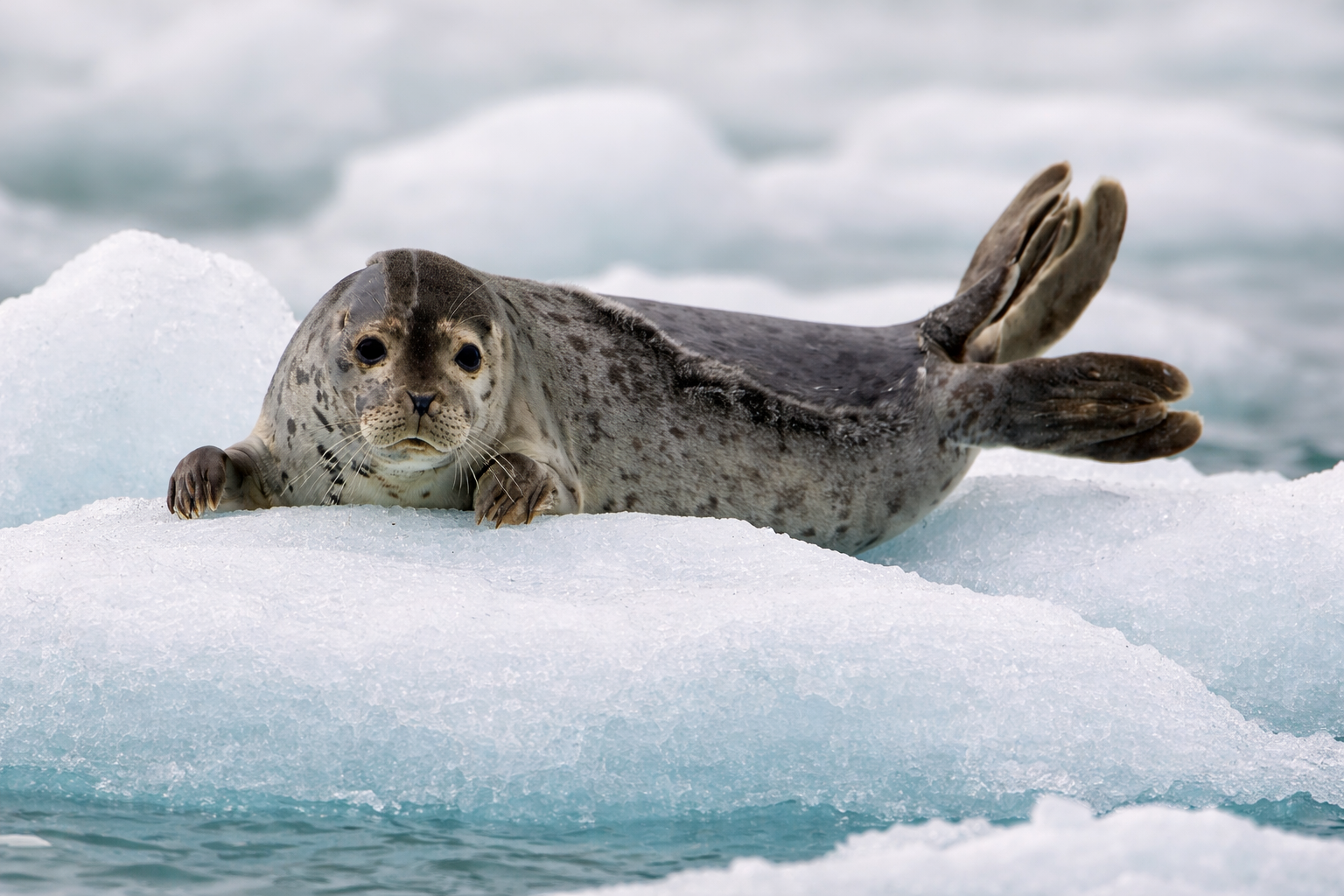
Seals are another reason to come in winter. Harbour seals live in the lagoon all year, and
Visit Vatnajökull, the regional tourism office, notes that in winter "the fish-filled lagoon
hosts numbers of seals, which visit the lagoon for an easy meal". Fjallsárlón's operator adds
that harbour and grey seals can both be seen year-round in South Iceland. Watch the river
mouth, ideally in the morning. Keep your distance and don't follow them onto the ice. Our wildlife guide has more on the seals and birds.
Season: all year, free (a parking fee applies; see our parking guide).
Duration: 1–2 hours.
Minimum age: none. Keep children well back from the surf line, because sneaker
waves and rolling ice are real hazards.
Best for: photographers, at the low winter sunrise and sunset, and anyone on a
budget.
Stay off the ice
Never climb onto icebergs, in the lagoon or on the beach. They can roll or break without warning,
and the water is cold enough to cause hypothermia within minutes.
4. The Northern Lights at the Lagoon and Diamond Beach
Long winter nights and almost no light pollution make Jökulsárlón one of Iceland's best places to see
the aurora reflected among icebergs. Use the Icelandic Met Office (vedur.is) aurora forecast, which
puts aurora activity on the Kp scale next to a cloud-cover map. The Met Office notes that "even low
activity (2) can be beautiful." Cloud cover matters more than the Kp number, so look for clear
patches over the southeast. The best viewing is usually late evening into the small hours.
If you don't want to drive icy roads at night, some operators run guided aurora chases from hotels
near Höfn and the lagoon. Fun Iceland lists a 5-hour "Northern Lights Chase from Glacier Lagoon" with
hotel pickup and photos included; it is sold direct, and we found no equivalent on GetYourGuide.
Multi-day photo workshops also stop at the lagoon. Our northern lights
guide and photography guide cover forecasts, camera settings and
composition.
Season: roughly September–April. The darkest months are November–February.
Price from: free if you go yourself. Guided chases vary, so check current
listings.
Best for: anyone staying overnight nearby, which you'll need to do in winter.
5. Ice Floating Among Icebergs at Fjallsárlón
This is the closest thing to a winter boat trip. Fjallsárlón Iceberg Boat Tours runs a guided Ice
Floating experience: you put on a thermal immersion suit and lie back in the water among icebergs. The
operator calls it the first of its kind in Iceland, and unlike the Zodiac it runs all
year. It is on GetYourGuide as the Fjallsárlón
ice floating tour, rated 5.0/5 but from only 8 reviews, so check the latest feedback before
you book.
Price: 15,900 ISK.
Duration: about 1.5 hours, with around 20–30 minutes in the water.
Age and size limits: minimum age 15 (listings give the upper limit as 65 or 75),
height 150–210 cm, maximum weight 110 kg. Not recommended during pregnancy or if you have a heart
condition.
Meeting point: Fjallsárlón tour reception, behind Frost restaurant. In winter the
float takes place close to the reception area.
Included: immersion suit, safety gear, a guide (8 guests per guide) and a hot
drink at Frost afterwards.
Best for: adventurous couples and anyone who mainly wanted to get out among the
ice.
Frost restaurant at Fjallsárlón says it is open daily all year, 10:00–16:00, which makes it a good
lunch stop. Fjallsárlón also sells "Aurora Huts – Winter" overnight stays in floating huts, listed for
Oct–Nov at 105,000 ISK. Our Jökulsárlón vs Fjallsárlón
comparison covers the smaller lagoon in more detail.
More Ideas Nearby
Svartifoss in Skaftafell: Vatnajökull National Park lists the standard S2 loop
at 5.8 km and an estimated 2 hours. In winter it can be icy, so bring microspikes and ask at the
visitor centre.
Þórbergssetur at Hali: a museum and restaurant 13 km east of the lagoon, open all
year. It's one of the few places nearby that serves dinner. Call ahead in winter.
Snowmobile or super jeep on Vatnajökull: Glacier Jeeps runs from Vagnsstaðir only
from 1 March to 15 October, so it doesn't operate in deep winter. Keep it in mind if you're visiting
in March. It is booked direct with the operator.
No car? A guided 2–3 day trip from Reykjavík handles the driving and usually
includes an ice cave, such as Nicetravel's 2-day
South Coast tour with a blue ice cave (from $718, 4.7/5 from over 250 reviews). Compare
the day tour, the 2-day tour and driving yourself in our guide to Reykjavík to Jökulsárlón in winter.
09:30–10:30: Walk the lagoon shore in blue-hour light, then head to the river
mouth to look for seals.
10:30–13:30:Ice
cave tour from the main car park. Book the earliest departure you can, so a delay doesn't
cost you daylight.
13:45: A quick lunch at the lagoon café, or a 10-minute drive to Frost at
Fjallsárlón (closes 16:00).
14:30–15:30: Diamond Beach for low sun on the ice. In midwinter the sun sets
around mid-afternoon.
Evening: Dinner at Þórbergssetur or your hotel, then check vedur.is and head back
to the lagoon if the sky is clear.
Alternative: replace the ice cave with Fjallsárlón
ice floating in the morning, or with a Skaftafell
glacier hike if you're staying further west. Glacier hike and ice cave combos (5–7 hours) take
up most of the daylight, so save the beach for the next morning.
Tips for Booking Winter Activities
Book the ice cave first, then plan the rest of the day. Glacier Trips advises
booking 4–8 weeks ahead from December to February, and 2–4 weeks ahead in the shoulder months.
Leave a buffer day. Storms close Route 1 and cancel glacier tours. Operators
usually rebook or refund when they cancel, but check each one's policy. Tröll, for example,
refunds in full (minus a 3% card fee) if you cancel more than 24 hours ahead.
Expect cave plans to change. Caves form and collapse every season. In 2025–26,
Melrakki ran only its longer combo because no suitable cave formed near the glacier edge, so read
the operator's current-season notes.
Check age and shoe-size limits. Crampons usually need EU size 34–35 or larger,
and minimum ages range from 6 to 15.
Drive in daylight. Read how to get to
Jökulsárlón and check road conditions on umferdin.is before every leg.
Stay close. You'll need an overnight stay to fit everything into short days. See
the hotel list in our November guide.
Holiday closures: the lagoon café closes 24–26 December and 31 December–2
January, so bring food if you're visiting on those days.
Frequently Asked Questions
No. The amphibian boat's published tour hours end on 15 November and the Zodiac stops at
the end of October. No boats run on the lagoon in December.
In May, for both the amphibian and the Zodiac. At Fjallsárlón, Zodiac tours restart in
April, and Glacier Adventure and Local Guide of Vatnajökull list a March start.
Yes. Winter adds ice caves, the northern lights, more ice on Diamond Beach and seals at the
river mouth, and there are fewer people at the lagoon than in summer. Not sure which month
to pick? Compare them in our best time to visit
Jökulsárlón guide.
No. The Zodiac runs April to November. In winter, Fjallsárlón offers year-round ice
floating, an ice cave tour and Frost restaurant instead.
Generally no. Arctic Adventures, Guide to Iceland and Nonni Travel list Jökulsárlón
kayaking for May to September only. One reseller, Fun Iceland, shows "All year" on its
listing, but we found no operator confirming winter kayaking, so ask the operator directly
before you count on it.
Ice cave tours, glacier hikes or ice cave and glacier hike combos, Diamond Beach and the
lagoon shore, seal-watching, the northern lights, and ice floating at nearby
Fjallsárlón.
Not on Vatnajökull from the southeast. Glacier Jeeps operates from 1 March to 15 October.
For winter snowmobiling, Arctic Adventures notes that "only Langjökull operates
year-round", with standard tours from around 33,990 ISK.
Caveats and Sources
Information checked in October 2026. Seasons, prices and age limits change, and every tour
depends on weather and ice, so always confirm with the operator before you book. Prices are adult
rates in ISK as published by operators.
Fjallsárlón Iceberg Lagoon (fjallsarlon.is): all tours, ice floating and Frost restaurant
South Iceland Marketing Office (south.is): ice floating and Glacier Jeeps
Arctic Adventures, Glacier Guides, Glacier Trips, Local Guide of Vatnajökull, Melrakki
Adventures, Icelandic Mountain Guides and Tröll Expeditions tour pages
Icelandic Met Office (en.vedur.is) aurora forecast
Fun Iceland, Guide to Iceland, Visit Vatnajökull and skaftafell.org