Diamond Beach Iceland: Everything You Need to Know
How to time your visit, what to expect, and why this black-sand shoreline belongs on every Jökulsárlón itinerary
Why Diamond Beach Feels So Unreal
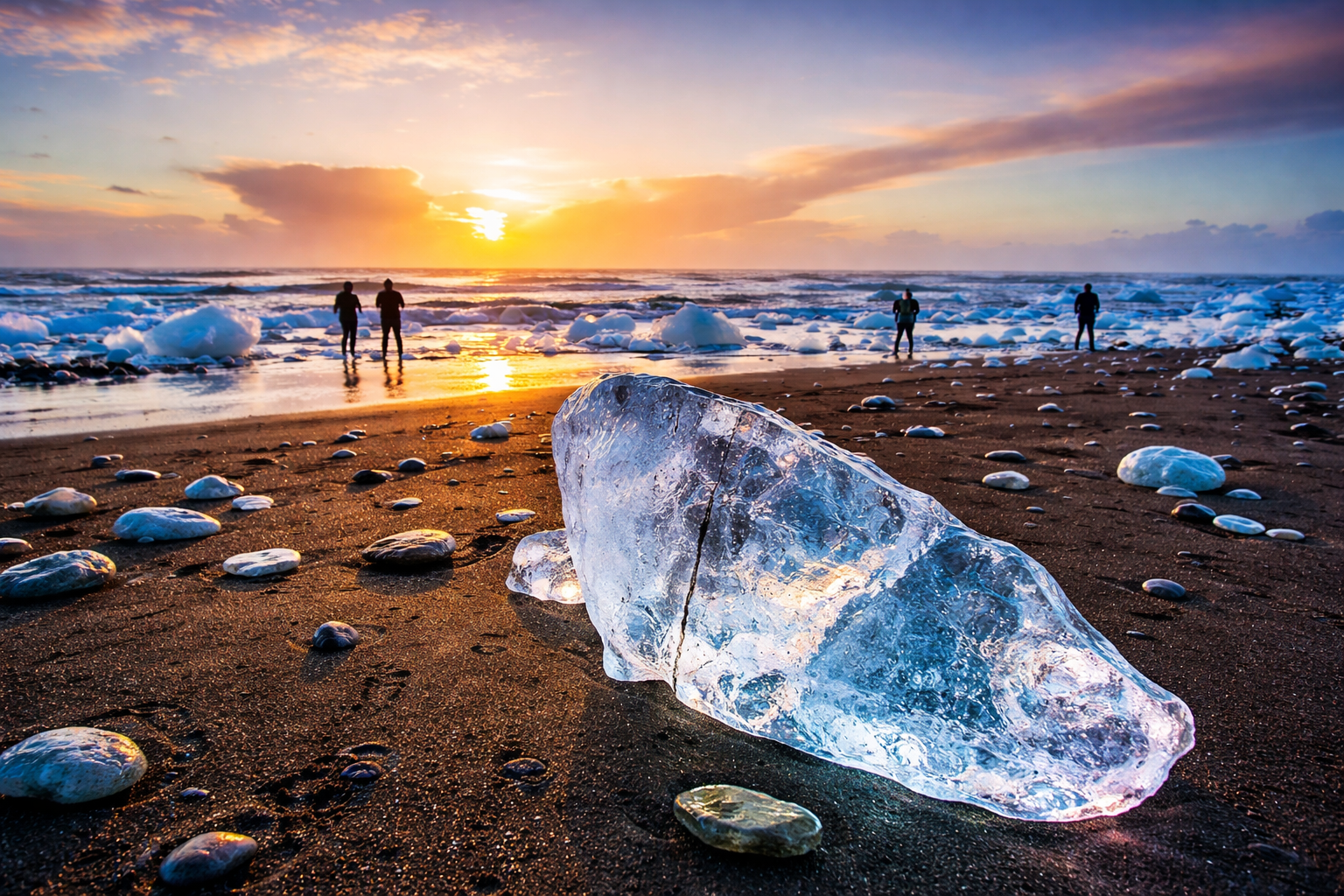
Diamond Beach is one of those rare places that looks edited even when you are standing right in
front of it. Chunks of ancient glacial ice wash onto a black volcanic shoreline, creating a scene
that changes with every tide, storm, and burst of glacier calving upstream.
Because it sits directly across the road from Jökulsárlón Glacier Lagoon, this is
not a separate detour. It is part of the same story: ice breaks from the glacier, drifts through
the lagoon, then reaches the Atlantic and returns to shore as scattered "diamonds."
Quick Answer
If you are already visiting Jökulsárlón, Diamond Beach is an essential stop.
It is free to access, only minutes away on foot, and often delivers some of the best photos of
the entire South Coast.
What Diamond Beach Actually Is
Diamond Beach is the popular name for part of Breiðamerkursandur, a stretch of
black sand on Iceland's southeast coast. The "diamonds" are not stones at all. They are glacial
icebergs from Breiðamerkurjökull, an outlet glacier of Vatnajökull, that drift through the lagoon
and are pushed back onto the shore by ocean tides.
The result is constantly changing. Some pieces are crystal clear, some are white and frosted, and
some glow blue when the light catches them. On certain days you will find only scattered chunks. On
others, the beach is crowded with ice of every size.
Why the Ice Looks Blue
Dense glacier ice has had most of its air squeezed out over centuries. That changes the way
light moves through it, leaving the deeper blue tones visible.
Top-Rated Iceland Experiences
Make the most of your visit to Diamond Beach and Jökulsárlón with top-rated experiences across Iceland, including glacier adventures in Skaftafell, boat tours at Jökulsárlón Glacier Lagoon, South Coast day trips, Golden Circle tours, Sky Lagoon in Reykjavík, whale watching tours from Reykjavík and Húsavík, northern lights excursions, and many other popular Iceland activities.
Where It Is and How to Get There
Diamond Beach sits directly on Iceland's Ring Road in southeast Iceland, beside Jökulsárlón Glacier
Lagoon and within easy reach of travelers following the South Coast east.
Starting Point
Approximate Distance
Typical Drive Time
Reykjavík
370 to 380 km
5 to 6 hours
Vik
About 190 km
About 2.5 hours
Höfn
About 80 km
About 1 hour
Jökulsárlón Lagoon
Across Route 1
About 5 minutes on foot
Without a car, most visitors reach Diamond Beach on long South Coast day
tours from Reykjavík that also include Jökulsárlón. Public transport options exist but are far less
practical if you want flexibility around weather and light.
Parking and Access
Diamond Beach itself is free to visit, but parking is paid. The two main lots sit
near the bridge and on the ocean side, and both provide quick, flat access to the beach. One paid
parking session covers the wider area, so most visitors combine the beach and lagoon in the same
stop.
Parking
Expect parking to cost about 1,000 ISK. The exact fee can change, but the
key point is that you do not pay an entrance fee to the beach itself.
Facilities
Restrooms, cafe access, and food trucks are typically on the Jökulsárlón side near the main
visitor area rather than directly on the beach.
Accessibility
Access from the parking area is straightforward, though the beach surface itself is uneven
black sand and can be slippery in wet or icy conditions.
Best Time to Visit Diamond Beach
Diamond Beach is worth visiting year-round, but the experience changes a lot with the seasons.
Winter usually brings more ice and more dramatic light, while summer makes the visit easier and far
more flexible.
Season
What It Is Like
Best For
Winter
More ice, low golden light, possible northern lights, harder driving
Photographers and dramatic conditions
Summer
Long daylight, easier travel, smaller and less consistent ice
Flexible road trips and late-evening visits
Shoulder Seasons
Balanced light, fewer crowds, variable weather
Travelers wanting a middle ground
Best Light
Sunrise and sunset are the best times of day. Low-angle light passes through
the ice, making it glow in a way that harsh midday sun usually cannot.
Photography Tips That Actually Matter
Diamond Beach is naturally photogenic, but a few simple choices make a big difference. Get low to
the sand, use a foreground ice chunk, and pay attention to the thin reflective layer of water left
behind when waves recede.
Practical Approach
Wide-angle lens: best for exaggerating the scale of foreground ice.
Tripod: useful for slower shutter speeds and wave motion.
Backlight: try shooting toward low sun to make the ice glow.
Wet sand: reflections often create the strongest compositions on calm
intervals between waves.
Simple Starting Settings
For soft wave motion, start around ISO 100, f/11, 1 to 4 seconds with a tripod.
For frozen splash and sharper action, move toward 1/200 to 1/500 and raise ISO
as needed.
Safety: Respect the Ocean Here
Diamond Beach is beautiful, but it is not controlled or protected from the Atlantic. The main danger
is the surf. Sneaker waves can reach much farther up the sand than visitors expect, and the pull
back toward the water is powerful.
Most Important Rule
Never turn your back on the ocean. Keep a safe distance from the waterline and
do not climb on ice chunks, which can shift, roll, or collapse unexpectedly.
Sneaker Waves
Stay farther back than feels necessary. Conditions can change in seconds.
Slippery Surfaces
Wet sand, meltwater, and winter ice make footing less stable than it looks.
Lethal Water Temperature
The water is near freezing year-round. Do not enter the surf.
How Long to Spend at Diamond Beach
Most visitors spend 30 minutes to 1.5 hours on the beach itself. If you are
combining it with Jökulsárlón, which you should, plan on 2 to 3 hours total for
the wider stop, or longer if you are joining a boat tour or waiting for the best light.
Best Combined Plan
Start at the lagoon, add a shoreline walk or boat tour, then cross to Diamond Beach for a second
look when the light changes. These two places are most rewarding when treated as one visit, not
separate stops.
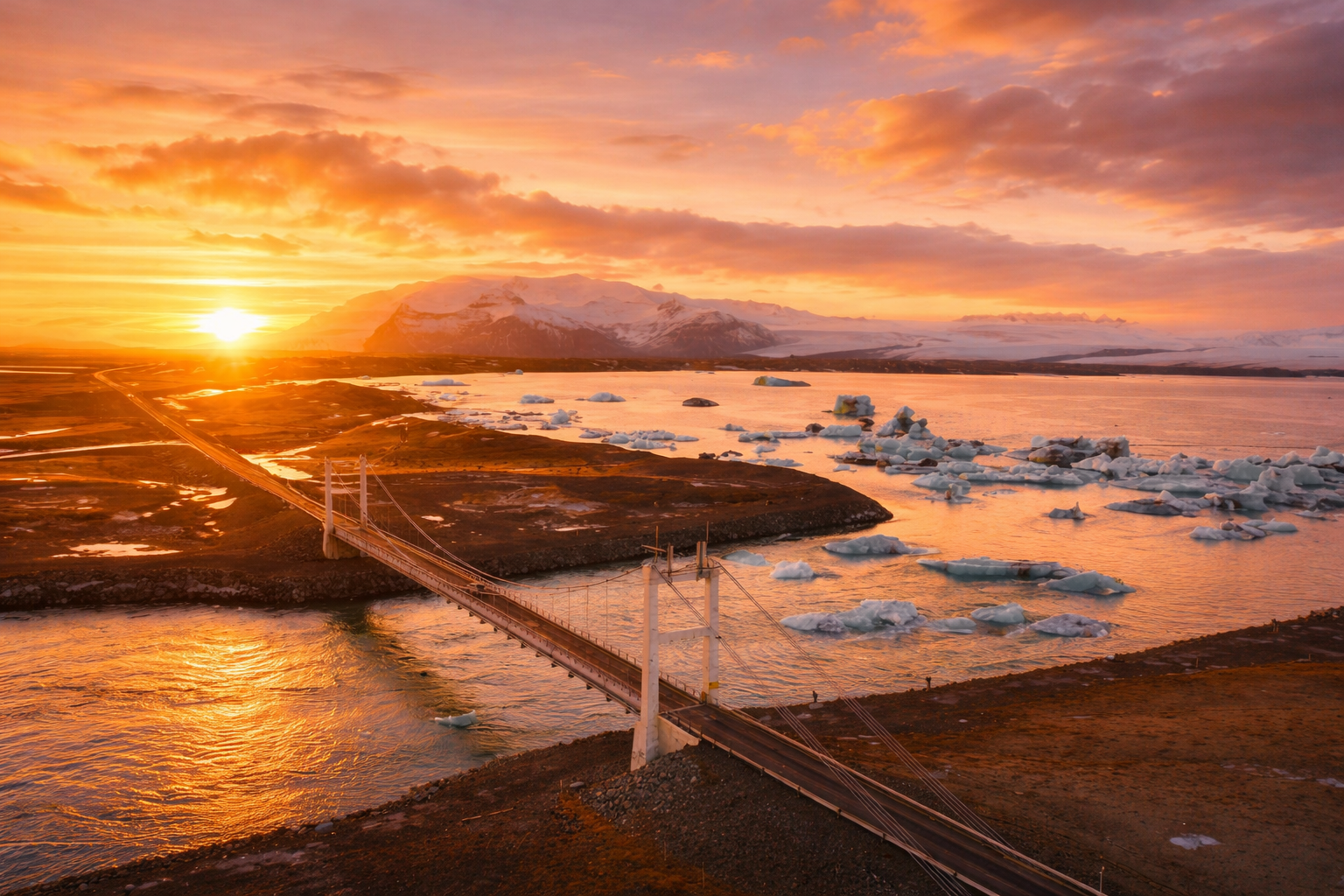
The lagoon side of the bridge, and the boats that cross it
Diamond Beach is the outflow; the icebergs upstream are what the boat trips actually go among. The amphibian boat is 7,100 ISK for 30–40 minutes, the Zodiac 16,600 ISK for about 75 minutes and it reaches the glacier face. Both leave from the shore a few minutes north of the beach car park — compare the amphibian and Zodiac boat tours if you are already parked here.
What Else to Do Nearby
Diamond Beach is rarely a standalone destination. It works best as part of a larger glacier-lagoon
stop.
Jökulsárlón Boat Tours
See the icebergs up close from the water in summer and early autumn.
Fjallsárlón
A quieter nearby glacier lagoon with a more intimate feel and fewer crowds.
Ice Cave Tours
A winter-only experience that pairs naturally with a stay in the Jökulsárlón area.
Frequently Asked Questions
Yes. There is no entrance fee. Visitors normally only pay for parking in the area.
Usually yes, but the amount varies every day with tides, weather, and glacier calving.
Winter often brings the most dramatic ice coverage.
No. Reynisfjara is a different black-sand beach near Vik. Diamond Beach is beside
Jökulsárlón on Iceland's southeast coast.
Visit both if possible because they are so close together. If you truly had to choose
one, Jökulsárlón offers the broader overall experience, but Diamond Beach is the faster
and often more photogenic stop.
Why Trust This Guide
🔄 Updated regularly
Prices, season dates, and availability are verified against GetYourGuide and operator sites each quarter. Last check: April 2026.
🔍 How we pick tours
Only tours with 4.5★ or higher and meaningful review volume on GetYourGuide. No paid placements.
🤝 Affiliate transparency
Some booking links earn us a commission at no extra cost to you. We don't recommend tours we wouldn't book ourselves.