Aurora Borealis Guide

Northern Lights at Jökulsárlón

Experience the ultimate dance of light. Witness the Aurora Borealis reflecting off the ancient icebergs of the glacier lagoon.

Jökulsárlón is arguably the most dramatic location in Iceland to witness the Northern Lights. The lack of light pollution, combined with the way the aurora's green and purple hues reflect off the floating ice, creates a celestial display unlike anywhere else on Earth.

Роwered by GetYourGuide

When to See the Northern Lights

September – April

This is the official aurora season. You need total darkness and clear skies. While they can be seen from late August, the core winter months (Nov-Feb) offer the longest nights.

Peak Hours

The lights typically appear between 9:00 PM and 2:00 AM, though they can flare up at any time of night if the geomagnetic activity is high.

Planning the trip around the aurora? Our best time for northern lights guide compares the season month by month, and the best places to see the northern lights in Iceland guide shows how Jökulsárlón stacks up against Þingvellir, Kirkjufell, and the dark-sky north.
Top-Rated Iceland Experiences

Browse top-rated experiences across Iceland — Jökulsárlón Glacier Lagoon boat tours, winter ice cave tours in Vatnajökull National Park, South Coast day trips from Reykjavík past Seljalandsfoss and Skógafoss, and glacier hikes in Skaftafell — to round out your trip.

Best Viewing Spots Around the Lagoon

One of Jökulsárlón's great advantages is that you barely need to move: every good vantage point sits within a few minutes of the main car park. Where you stand mainly changes your foreground.

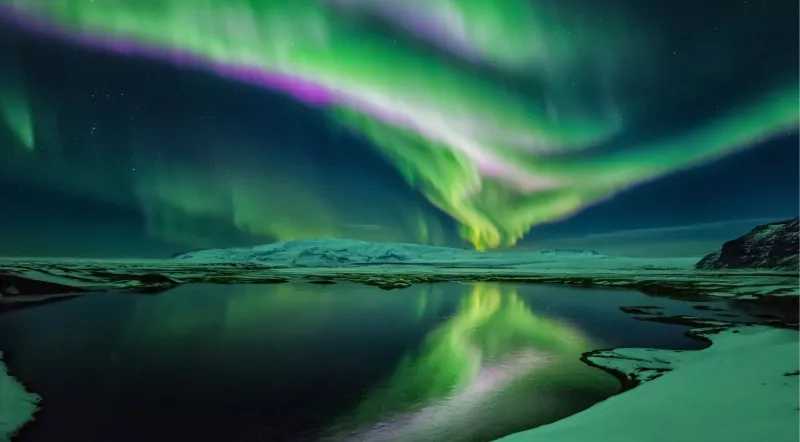
Green aurora reflected in the still water of the glacier lagoon with snow-covered ice in the foreground

Main Lagoon Shoreline

The classic composition — the aurora doubled in still water between floating icebergs. Walk a few minutes east or west of the car park to escape headlight glare.

The Bridge Area

Wider views across the lagoon and toward the ocean outlet, useful when the display stretches across the whole sky.

Diamond Beach

Across Route 1, stranded icebergs glow on black sand under the lights — see our Diamond Beach guide. Stay well back from the waterline at night; sneaker waves are invisible in the dark.

Fjallsárlón (Backup)

Ten minutes west, Fjallsárlón offers a smaller, quieter lagoon when you want the ice to yourself.

Stay Overnight — Don't Day-Trip the Aurora

Jökulsárlón is around five hours from Reykjavík, and the aurora rarely performs on a schedule. The single biggest thing you can do for your odds is to sleep near the lagoon — around Hali, Hof, or Höfn — so you can step outside the moment the sky clears at 11 PM instead of watching it happen from a car heading west. Two or three nights in the area gives you multiple attempts, and the days fill themselves: the lagoon, Diamond Beach, and winter ice caves are all on your doorstep. See how to get here for the drive and weather and road conditions before any winter night out.

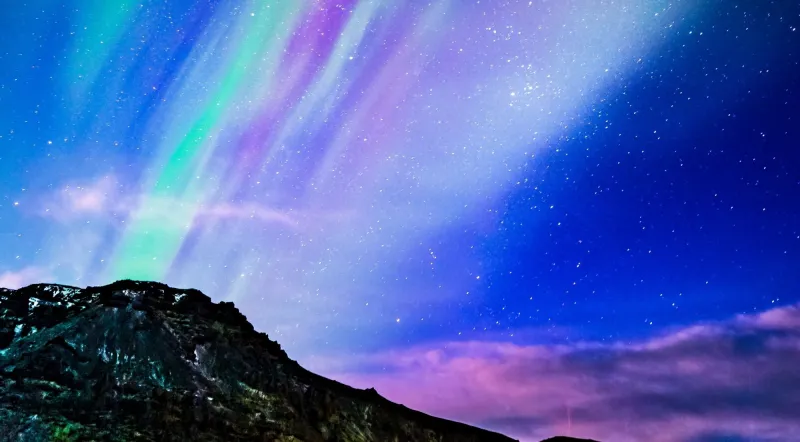
Faint aurora and starry sky above a dark mountain ridge in southeast Iceland

Photography Tips for Aurora over Ice

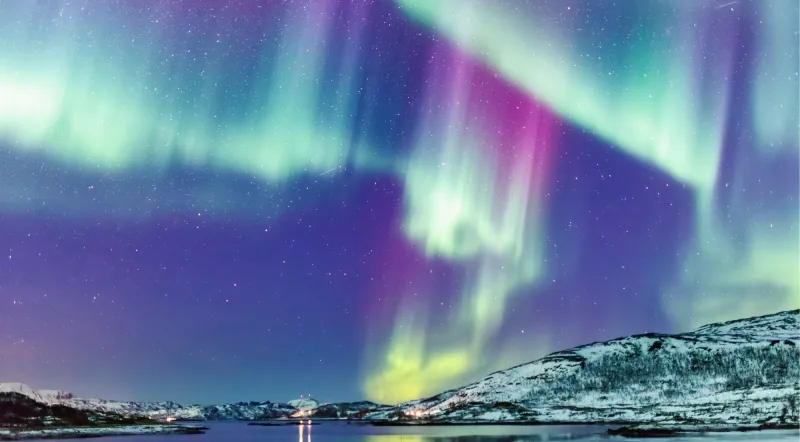
Green and purple northern lights over a snowy Icelandic coastline at night

Use a Tripod

Long exposures (5-20 seconds) are mandatory. Even the slightest camera shake will ruin the clarity of the stars and ice.

Manual Focus

Autofocus fails in the dark. Set your lens to manual and focus on a distant star or a brightly lit iceberg.

Watch for Tides

If you're shooting at Diamond Beach, be extremely careful of "sneaker waves" while focused on your camera. Never turn your back on the ocean.

For daytime compositions and the lagoon's most photogenic angles, see our full photography guide.

Expert Advice

Three Requirements for Success

  1. Darkness: Visit during the new moon or when the moon is low for the best contrast.
  2. Clear Skies: Clouds are the auroras' only enemy. Check the cloud cover forecast on vedur.is.
  3. Solar Activity: Look for a Kp-index of 3 or higher for a strong show at latitudes like Jökulsárlón.

Fill the Daylight: Ice Caves by Day, Aurora by Night

Aurora season is also ice cave season. From roughly November to March, guided tours leave from the Jökulsárlón car park itself for the natural blue ice caves under Vatnajökull — so the classic winter day here is a cave in the morning, Diamond Beach at golden hour, and the shoreline again after dark. It is the easiest one-two combination in Icelandic winter travel, and you never move your car more than a few minutes.

Departs from the lagoon car park

From Jökulsárlón: Vatnajökull Glacier Blue Ice Cave Tour

From $166 · ★ 4.6 (944 reviews) · Free cancellation

A super-jeep ride from the lagoon onto Breiðamerkurjökull and a guided walk into a natural blue ice cave — the perfect daytime half of an aurora-hunting day.

Роwered by GetYourGuide

Frequently Asked Questions

Where is the best spot to watch the aurora at Jökulsárlón?

The main lagoon shoreline near the car park gives the classic view — aurora reflected in still water between floating icebergs. The bridge area offers wider views toward the ocean outlet, and Diamond Beach across Route 1 adds stranded ice on black sand as a foreground. Fjallsárlón, 10 minutes west, is a quieter backup.

What time do the northern lights appear at Jökulsárlón?

During the September-to-April season, the most productive window is roughly 9 PM to 2 AM, with activity often peaking around 11 PM to 1 AM. The aurora comes in waves, so give a quiet sky at least 30–60 minutes before giving up.

Do I need a tour to see the northern lights at the lagoon?

No. If you are staying near Jökulsárlón you can simply step outside and walk to the shoreline — it is one of the darkest accessible places in Iceland. Guided aurora tours are mainly useful if you are based in Reykjavík and would rather not drive winter roads at night; our Iceland-wide aurora guide covers those options.

Can you photograph the aurora from Diamond Beach?

Yes, and the stranded icebergs on black sand make a spectacular foreground. But sneaker waves are dangerous in the dark: stay well back from the waterline, never turn your back on the ocean, and work from the upper beach — the same rules as our black sand beaches guide lays out.

Stay Warm

Planning a Winter Trip?

Combine your aurora hunting with a daytime ice cave tour for the ultimate Jökulsárlón winter adventure.

Explore Winter Tours