There Is No Single Best Time — Only the Best Time for You
A trip built around the midnight sun and glacier boat tours looks nothing like one built around ice
caves and the northern lights, and both are wonderful. This month-by-month guide breaks down
daylight, weather, crowds, prices, and what is actually possible in each season, so you can match
your trip to what you most want to see. If your itinerary includes
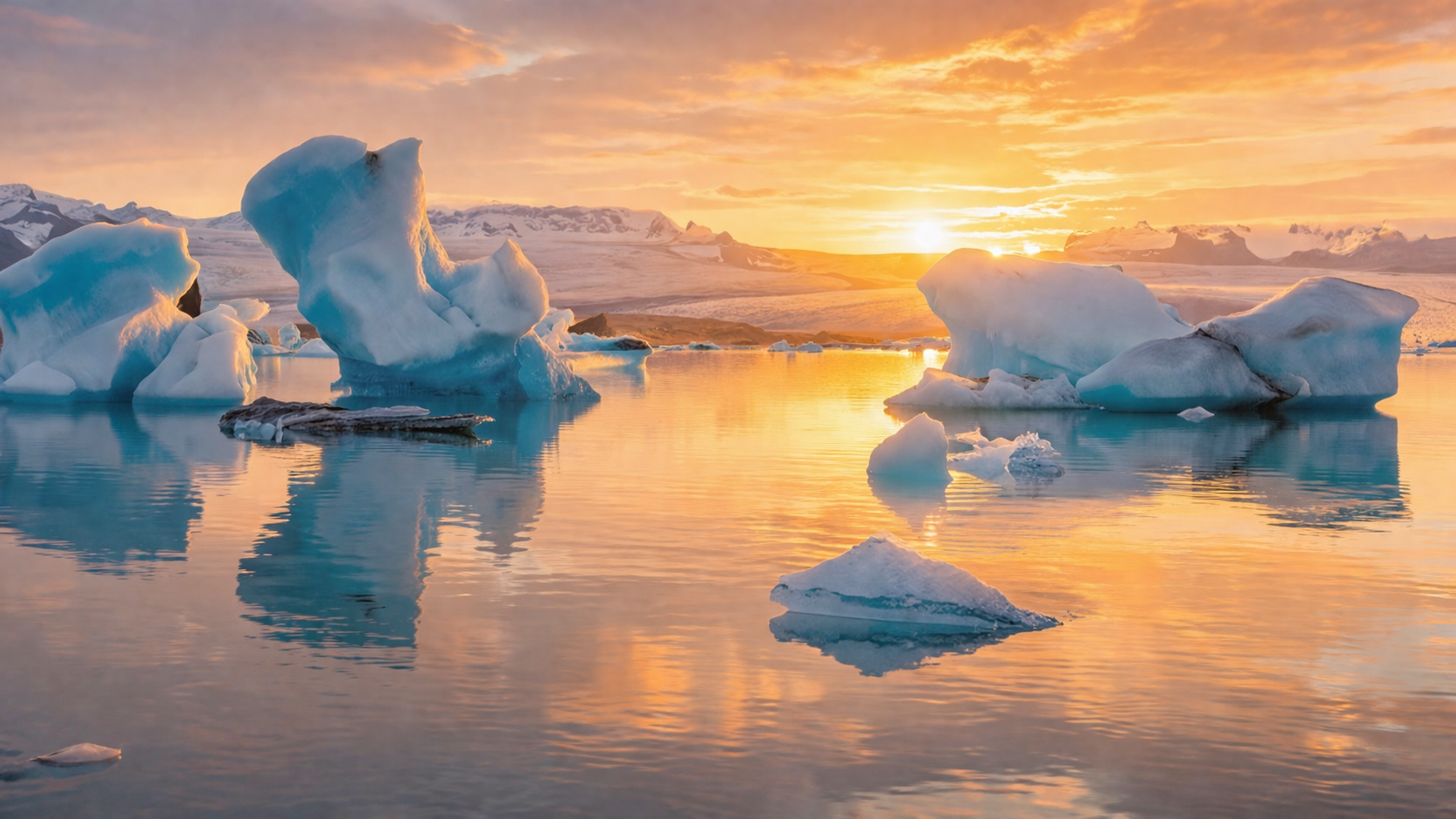
Jökulsárlón Glacier Lagoon, we flag exactly when its boat tours, ice
caves, and aurora windows open and close.
The classic day trip, any season
Reykjavik: Jokulsarlon Glacier Lagoon & Diamond Beach Tour — the flagship South Coast day trip. From $211 · 14 hours · ★ 4.68 (3,758 reviews) · Free cancellation.
Worth Adding to Your Itinerary
Whatever season you choose, Iceland's classics are within reach. Browse
Jökulsárlón Glacier Lagoon boat tours and Diamond Beach day trips from
Reykjavík, winter ice cave tours in Vatnajökull National Park, the
year-round Katla ice cave from Vík, Golden Circle tours past
Geysir and Gullfoss, and South Coast waterfall tours to Seljalandsfoss and
Skógafoss.
The Two Icelands: Summer vs Winter
Before the calendar, it helps to understand the fundamental trade-off.
Summer (June–August)
Nearly endless daylight, the mildest weather, open highland roads, glacier boat tours, and
puffins. The easiest time to drive and the most forgiving for first-timers — but also the
busiest and most expensive season. See
Jökulsárlón in summer for what the lagoon
is like at its peak.
Winter (November–March)
The northern lights, natural blue ice caves, snow-draped landscapes, and far fewer crowds.
The catch is short daylight and challenging driving conditions.
The Shoulder-Season Secret
April/May and September/October often give the best overall value, blending decent conditions
with lower prices and thinner crowds.
Daylight and Weather Through the Year
Iceland's daylight swings wildly. Around the June solstice, Reykjavík gets about 21 hours of
usable light, with the sun barely dipping below the horizon (the "midnight sun" runs
roughly late May to early August). Around the December solstice, there are only 4–5 hours
of daylight, with the sun low from late morning to mid-afternoon, wrapped in long, soft
twilight.
Temperatures are milder than the latitude suggests, thanks to the Gulf Stream. Reykjavík's warmest
month is July, averaging around 14°C (57°F) by day, occasionally higher inland.
Winter in the capital typically hovers between about -3°C and +3°C — cold, but not
extreme. Wind and rain, rather than temperature, are usually the bigger factor, so waterproof
layers matter year-round — our what to wear guide covers
the layering system.
Month-by-Month
| Month |
What It Is Like |
Best For |
| January |
The darkest, quietest month; 4–6 hours of light, icy roads |
Northern lights and prime ice cave season at low prices |
| February |
Days lengthen to 7–10 hours; skies often crisp and clear |
Aurora hunting on a budget; ice caves still open |
| March |
Transition month; days grow quickly, ice cave season winds down |
Late-winter value before the spring uptick |
| April |
Spring shoulder; thin crowds, roads reopening, aurora fading |
Flexible, good-value trips |
| May |
Long days, greening countryside, puffins arriving |
Pre-peak prices — Jökulsárlón boat tours typically begin |
| June |
Midnight sun; highland F-roads open mid-to-late month |
Road trips with effectively unlimited daylight |
| July |
Warmest and busiest month, highest prices |
Full access to everything — book well ahead |
| August |
Still warm and green; darkness returns late in the month |
Summer trips with a chance of the first faint aurora |
| September |
Northern lights return, crowds ease, weather still mild |
Arguably the best-balanced month for a first trip |
| October |
Shoulder value; natural ice cave season begins |
Aurora plus ice caves before deep winter driving |
| November |
Winter proper; boat season runs to around 15 November |
Catching a last lagoon cruise plus aurora and ice caves |
| December |
Shortest days, festive and atmospheric, long twilights |
Christmas markets, aurora on clear nights, ice caves |
What's Possible When
| Activity |
Season |
| Boat tours at Jökulsárlón |
May to ~15 November |
| Natural blue ice caves |
~October/November to March |
| Northern lights |
Late August/September to April |
| Katla ice cave (near Vík) |
Year-round |
| Midnight sun |
Late May to early August |
| Puffins on the coast |
Roughly May to August |
| Highland F-roads |
Mid/late June to autumn |
If the aurora is your priority, see the
best places to see the
northern lights in Iceland and the
best time for northern
lights guides.
Open every month of the year
From Vik: Katla Ice Cave and Super Jeep Tour
From $198 · ★ 4.6 (2,190 reviews) · Free cancellation
The one ice cave you can visit even in July: a super-jeep ride onto the Mýrdalsjökull glacier to
walk inside the black-and-blue ice of the Katla cave, whatever month your trip lands in.
Roads and Driving by Season
In summer, a standard 2WD car handles Route 1 and the South Coast comfortably. In
winter (roughly November to April), studded tyres are essential, a 4x4 is strongly
recommended, and daylight is limited — so plan shorter driving days and always check road.is and
the Met Office at vedur.is before setting out. See our
weather and road guide and
how to get here for specifics on the route to the
lagoon.
Winter Driving Reminder
Storms can close sections of Route 1 at short notice in winter. Build a buffer day into any
December–March itinerary that includes the southeast coast.
When Is Iceland Cheapest?
If budget drives your decision, the cheapest months are generally February, April, May, and
October — outside the summer peak and the Christmas/New Year spike. You will trade some
daylight or weather certainty for meaningfully lower flight and accommodation prices. Our
prices guide breaks down what a Jökulsárlón visit costs once you
are there.
So, When Should You Go?
Choose Summer
For the easiest driving, endless daylight, puffins, and glacier boat tours on the lagoon.
Choose Winter
For the northern lights, ice caves, and snowy solitude with far fewer visitors.
Choose September or May
For the best all-round balance of conditions, cost, and crowds.
For a trip centred on Jökulsárlón specifically, see the tailored
best time to visit the lagoon guide.
Frequently Asked Questions
What is the overall best time to visit Iceland?
For most first-time visitors, June through August offers the easiest experience, while September
gives the best balance of aurora, mild weather, and lighter crowds. Winter is best if the
northern lights or ice caves are your priority.
When can you see the northern lights in Iceland?
From roughly late August/September to early April, when the nights are dark enough. They are not
visible during the midnight-sun period of late May to late July. See the
best places to see
them once your dates are set.
When is the cheapest time to visit Iceland?
February, April, May, and October are typically the most affordable months, avoiding both the
summer peak and the holiday season.
When do Jökulsárlón boat tours run?
The boat season runs from around May to 15 November.
Outside those months the lagoon is still spectacular from shore, and
ice cave tours take over as the winter highlight.
Found Your Season?
Whichever month you pick, the glacier lagoon, Diamond Beach, and the South Coast are ready — compare
tours and lock in your dates.
Explore Tours