Where You Stand Decides What You See
Iceland is one of the finest countries on Earth for watching the aurora borealis. The whole island
sits directly beneath the auroral oval, and away from the towns the skies are genuinely dark. But
the lights are not equally good everywhere. Where you stand decides whether you see a faint green
smudge above the streetlights or a full curtain rippling over a mirror-still lagoon.
This guide covers the best places to see the northern lights in Iceland, why some spots beat others,
and how to give yourself the best possible odds — including why Jökulsárlón is one of the
strongest aurora locations in the entire country. There is also a reason 2026 is a special
year to plan an aurora trip, which we get to below.
Rather have a guide do the chasing?
Iceland: South Coast and Northern Lights Tour — waterfalls and black beaches by day, aurora hunting by night. From $173 · 13 hours · ★ 4.3 (95 reviews) · Free cancellation.
Other Experiences You Might Enjoy
Aurora hunting pairs naturally with everything else southeast Iceland does well. Browse
Jökulsárlón Glacier Lagoon boat tours, winter ice cave tours from Vík and
Skaftafell, South Coast day trips from Reykjavík past Seljalandsfoss and
Skógafoss, Golden Circle tours that stop at Þingvellir National Park, and
Snæfellsnes Peninsula tours beneath Kirkjufell.
When the Northern Lights Are Visible
The aurora is present year-round, but you can only see it against a dark sky. That means the season
runs roughly from late August or early September to early April. From late May to
late July, Iceland's midnight sun keeps the sky too bright, and the lights are effectively invisible
even when the sun is active.
The best viewing window on any given night is usually between about 9pm and 2am,
with activity often peaking around 11pm to 1am. You need three things to line up: darkness, clear
skies, and enough geomagnetic activity. Two of those — darkness and clarity — are more about timing
and location than luck, which is exactly why choosing the right place matters so much. For a
month-by-month breakdown, see the best time to
visit Iceland and the dedicated best
time for northern lights guide.
The 2025–2026 Solar Maximum
The sun runs on an eleven-year activity cycle, and 2025–2026 sits close to the peak of
Solar Cycle 25. Nights that reach a Kp of 3 to 5 — bright, dynamic aurora — now occur
multiple times a month rather than a handful of times a year. If you have been waiting for a
good year to chase the lights in Iceland, this is one of the best in over a decade.
Understanding the Aurora Forecast
You do not need to be a physicist, but a little knowledge dramatically improves your success rate.
The Kp index is a 0–9 scale of geomagnetic activity, and because Iceland sits so
far north, you do not need a high number.
| Kp Level |
What You Can Expect in Iceland |
| Kp 2–3 |
Enough for a visible display on a dark, clear, moonless night |
| Kp 4–5 |
Bright, moving curtains of light |
| Kp 6+ |
Displays that can fill the whole sky |
The most useful tool is the Icelandic Met Office aurora
forecast at en.vedur.is, which combines the Kp forecast with a cloud-cover map on a single
screen. White areas mean clear skies (good) and green areas mean cloud (bad). Because clouds are
often the real obstacle in Iceland, you are frequently "chasing holes in the clouds" rather than
chasing the aurora itself.
Other helpful resources include the NOAA Space Weather Prediction Center for short-term nowcasts and
the free "Veður" app. Check the forecast around 6–7pm to plan your evening, and be ready to drive to
clearer skies if needed.
The Best Places to See the Northern Lights in Iceland
1. Jökulsárlón Glacier Lagoon
Jökulsárlón is repeatedly ranked among the very best aurora locations in Iceland, and for good
reason. It sits on the remote southeast coast with almost no light pollution for miles, so the sky
here is about as dark as Iceland gets. What makes it exceptional, though, is the foreground: the
aurora reflects in the still water of the lagoon and glints off the floating icebergs, effectively
doubling the display. Across Route 1, Diamond Beach offers
ice sculptures on black sand as an alternative composition on the same night.
Because Jökulsárlón is around 4 hours 45 minutes from Reykjavík, the smart move is to stay
nearby overnight rather than attempt it as a day trip. Basing yourself near the lagoon
means you can wait for a clear window and photograph the lights over the ice. Our
photography guide covers the best vantage points, and the
Northern Lights at Jökulsárlón page has
lagoon-specific viewing advice.
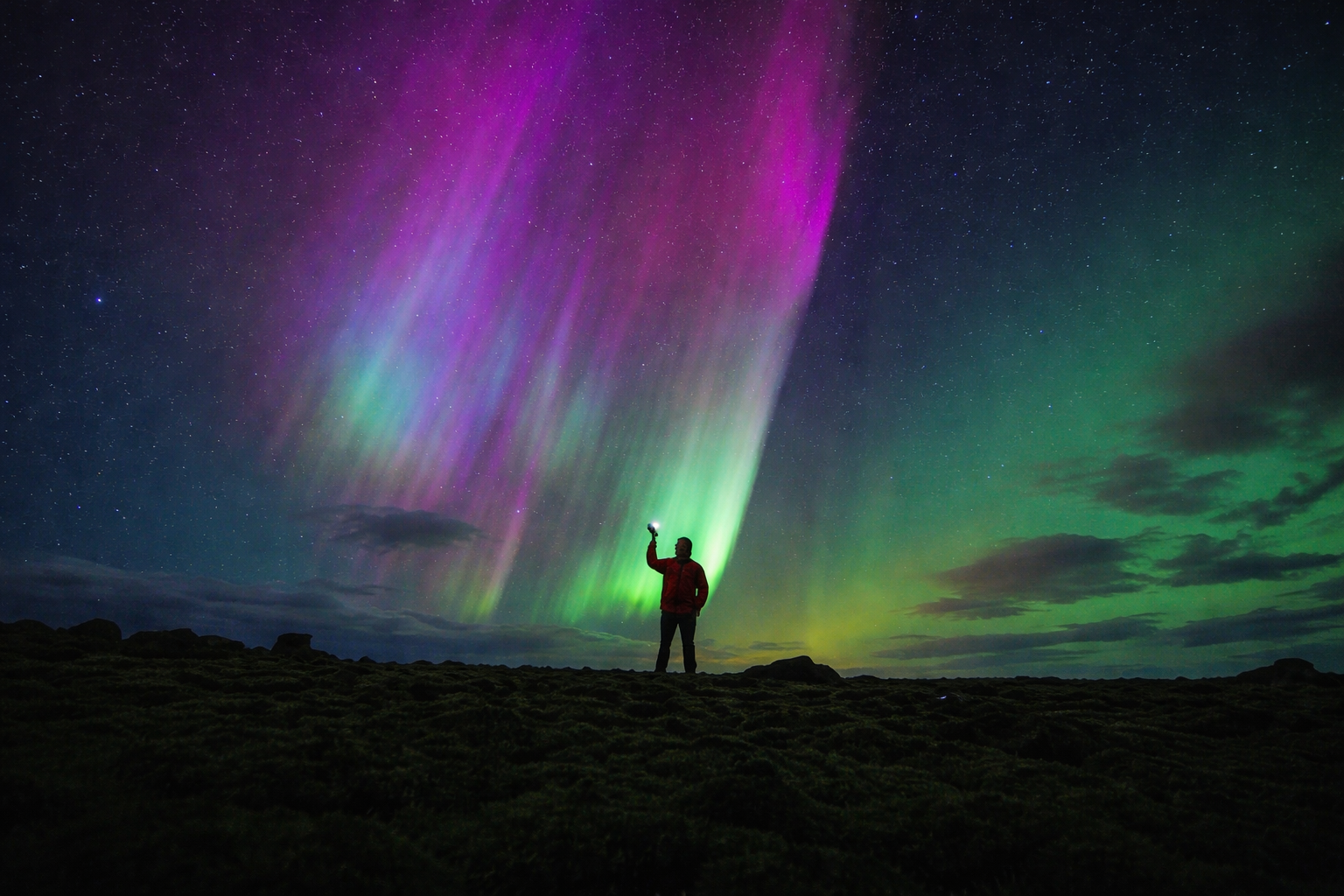
2. Þingvellir National Park
On the Golden Circle and only about 45 minutes from Reykjavík, Þingvellir is the most accessible
genuinely dark site near the capital. This UNESCO-listed rift valley — where the North American and
Eurasian tectonic plates pull apart — has reflective lakes and dramatic geology that make superb
foregrounds. Its proximity means you can watch the forecast in Reykjavík and drive out only when
conditions look promising.
3. Kirkjufell and the Snæfellsnes Peninsula
About two and a half hours from Reykjavík, the Snæfellsnes Peninsula combines dark skies with
Iceland's most photographed mountain, Kirkjufell. The small waterfall Kirkjufellsfoss makes a
classic aurora foreground. The peninsula juts into the North Atlantic under very little light
pollution, so on a clear night even a modest Kp reading delivers.
4. Vík and the South Coast
The area around Vík, with its sea stacks and black beaches, is beautiful under the aurora and roughly
halfway between Reykjavík and Jökulsárlón — see our tours
from Vík for what runs in the area.
Sneaker-Wave Warning
The famous black sand beaches around Vík are dangerous in the dark because of powerful sneaker
waves — never go down to the water's edge at night. Watch from safe, elevated ground instead.
5. Dark spots near Reykjavík
If you are short on time, you do not have to leave the capital area entirely.
Grótta lighthouse on Seltjarnarnes is a local favourite, reachable by city bus and
only about 12 minutes from downtown, with a dark ocean horizon. Öskjuhlíð hill and
Perlan give a slightly darker vantage, and Perlan's planetarium show is a good backup on
cloudy nights. City-centre viewing only works on strong nights (roughly Kp 5–6 and above), when the
lights overpower the streetlights.
6. The remote north and the Westfjords
For the darkest skies of all, the Westfjords (Bortle class 1–2) and the area around
Lake Mývatn and Akureyri in the north are outstanding. The north often enjoys
clearer weather than the south when Atlantic systems roll in. The trade-off is access: many
Westfjords roads close or become difficult in deep winter, so these areas are best in the shoulder
months of late September, October, and April.
Practical Tips for Seeing the Aurora
Get Away From Light
Even a little distance from town makes a large difference. Turn off headlights and phone
screens once you arrive, and give your eyes 15–20 minutes to adjust.
Plan Around the Moon
A bright full moon washes out faint displays; the days around a new moon are ideal for the
deepest, darkest skies.
Dress for a Long Wait
You may stand still for an hour or more. See our what to
wear guide for layering that actually works at night.
Drive Safely
Never stop on the shoulder of Route 1 — use marked pullouts and car parks. In winter, review
road.is and our weather and road conditions page before
any night drive.
Be Patient and Flexible
The aurora comes in waves; a quiet sky can erupt 30 minutes later. Give it time before calling it
a night.
Should You Book a Northern Lights Tour?
If you are not comfortable driving on dark winter roads, a guided northern lights tour is a sensible
choice. Guides monitor the forecast, drive you to the clearest skies, and often re-invite you free
of charge if the first night is clouded out. If you are already staying near the lagoon, though,
you have one of the country's best aurora sites on your doorstep and can simply step outside.
Either way, plan your visit within the aurora season — the
best time to visit the lagoon guide helps you pick
your window.
Multi-day aurora hunt
From Reykjavík: 5-Day Northern Lights Hunt & Glacier Lagoon
From $1,668 · 5 days · ★ 5.0 (9 reviews) · Golden Circle, glacier lagoon & black sand beaches
A guided winter loop through the dark-sky country in this guide — breathtaking sights by day,
aurora hunting by night, with the glacier lagoon on the itinerary so you get multiple attempts
in one trip.
Frequently Asked Questions
Where is the best place to see the northern lights in Iceland?
There is no single answer, but Jökulsárlón Glacier Lagoon is consistently rated among the best,
thanks to extremely dark skies and reflective water and icebergs that double the display.
Þingvellir, Snæfellsnes/Kirkjufell, and the far north around Mývatn are also excellent.
Can you see the northern lights at Jökulsárlón?
Yes. Jökulsárlón is one of Iceland's premier aurora locations. Its remote southeast setting means
very low light pollution, and the lagoon and Diamond
Beach provide reflections and foregrounds that few other places can match, especially from
September to March.
What months are best for the northern lights in Iceland?
The season runs from roughly late August/September to early April. September, October, February,
and March often give the best balance of darkness, reasonable weather, and long enough nights.
Is 2026 a good year to see the aurora?
Yes. 2025–2026 is near the solar maximum of the current solar cycle, so strong displays are more
frequent than in most years — a good reason to plan a trip now.
Planning an Aurora Trip Around Jökulsárlón?
Base yourself under the darkest skies in the country and pair aurora nights with glacier scenery,
ice caves, and Diamond Beach by day.
Explore Tours