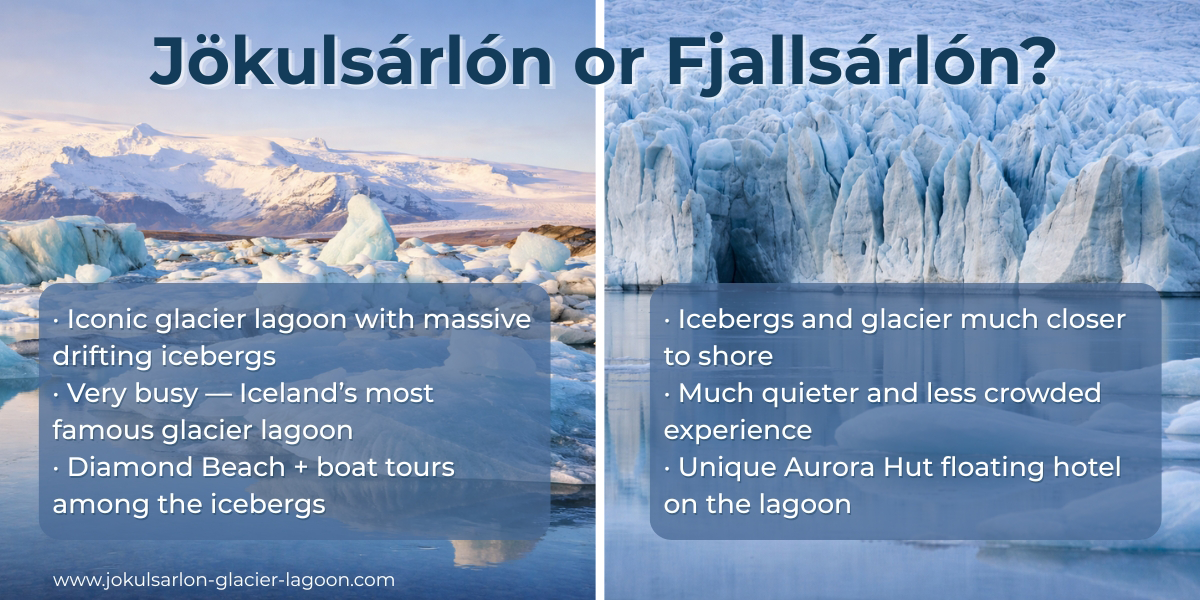
Only 10 km apart, these two glacier lagoons offer vastly different experiences. Here is how to choose.
Most travelers think of Jökulsárlón as the "main" attraction, but Fjallsárlón is a
hidden gem that many prefer for its intimacy and
dramatic glacier views. Both sit on Iceland's South Coast in Vatnajökull National Park, a UNESCO
World Heritage Site—and they're close enough that many travelers sensibly stop at both.
The Quick Answer
For a single stop: Jökulsárlón wins for first-time visitors on a classic
South Coast itinerary—it's Iceland's most famous lagoon, directly tied to Diamond Beach, and supported by multiple tour
types.
For travelers who dislike crowds and want the glacier to feel
"right there": Fjallsárlón is the better lived experience, officially
framed as a quieter nature stop with facilities and small-group tours.
The Best Plan
If you have half a day in the area, the highest-satisfaction
plan
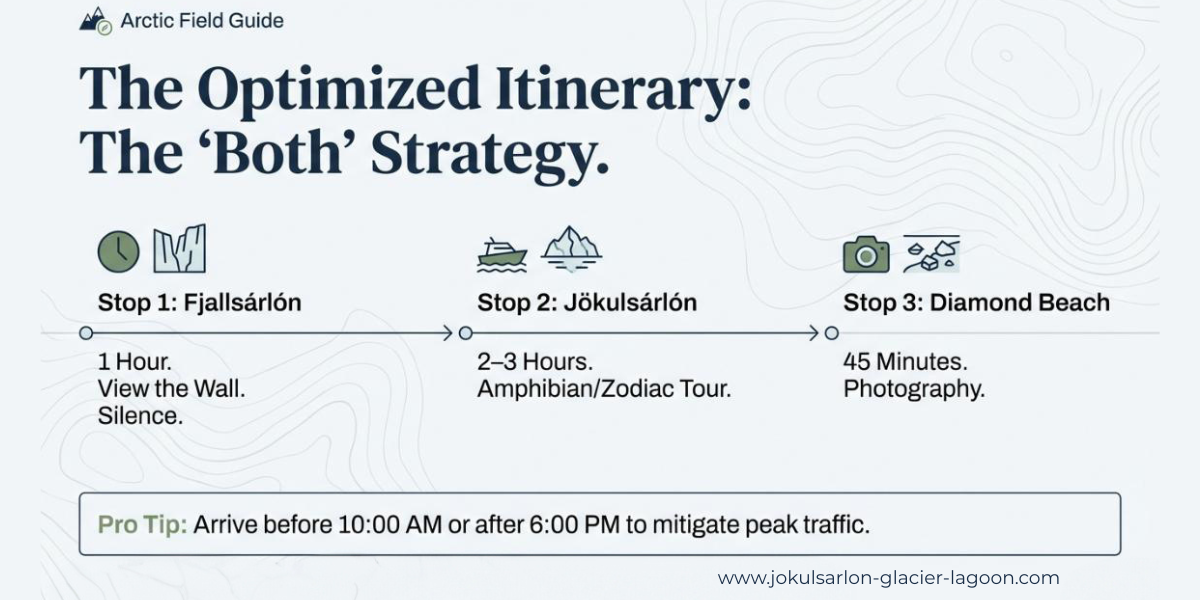
for most first-timers is: Fjallsárlón first (quieter start, close
glacier
wall), then Jökulsárlón + Diamond Beach—because you get the intimate
glacier drama and the famous beach in one trip.
Side-by-Side Comparison
Feature
Jökulsárlón
Fjallsárlón
Size
Massive (~18 km²)
Intimate (~4 km²)
Glacier Proximity
Glacier visible, but lagoon size pushes it further from shore
Glacier tongue comes right into the lagoon — feels towering
Icebergs
Huge, varied colors; flow toward the ocean
Smaller, more clustered; can freeze in place during winter
Crowds
Very High — ~100,000 visitors in July alone
Low to Moderate — promoted as a quieter alternative
Jökulsárlón is the bigger, more open-feeling lagoon with a famous ocean outflow.
Fed by Breiðamerkurjökull—an outlet glacier of the Vatnajökull ice cap—it has expanded to
18 km² and reached depths of approximately 284 meters, making it the deepest lake in
Iceland. That depth allows 90% of an iceberg's mass to stay submerged, permitting bergs taller than
multi-story buildings to float freely.
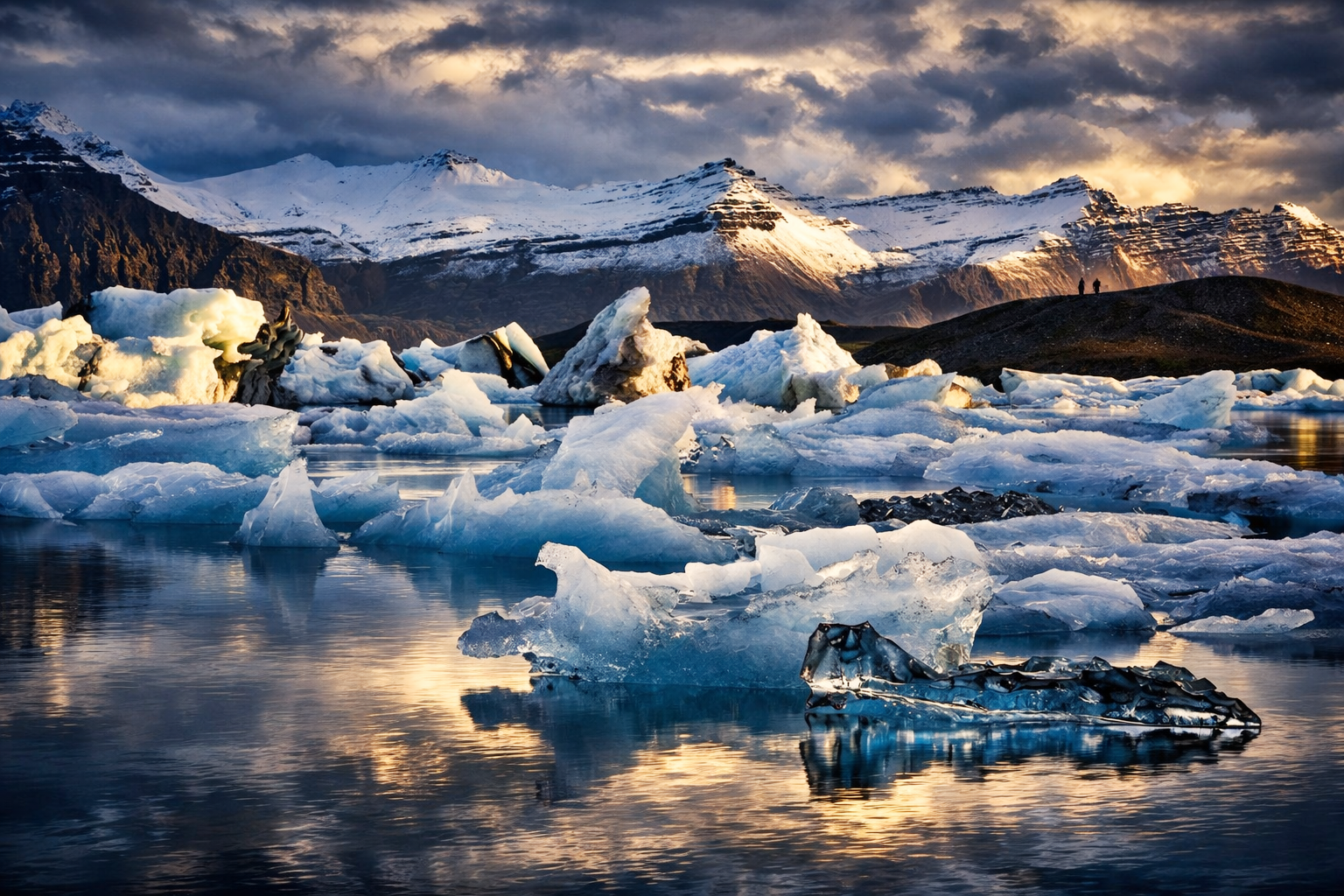
Jökulsárlón: Massive blue icebergs drift across Iceland's deepest lake
toward the Atlantic.
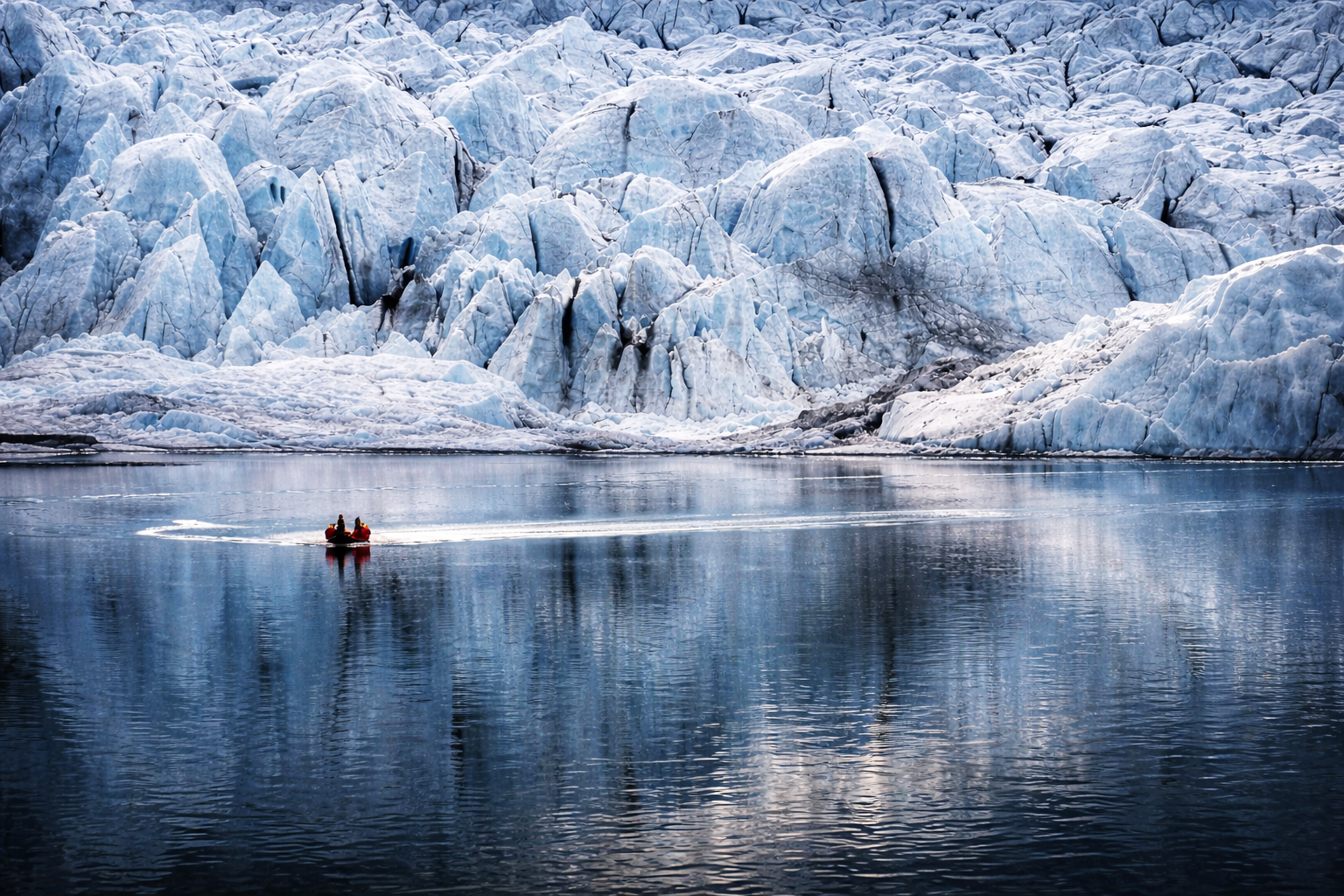
Fjallsárlón: An intimate landscape where the towering Fjallsjökull glacier
wall meets the water.
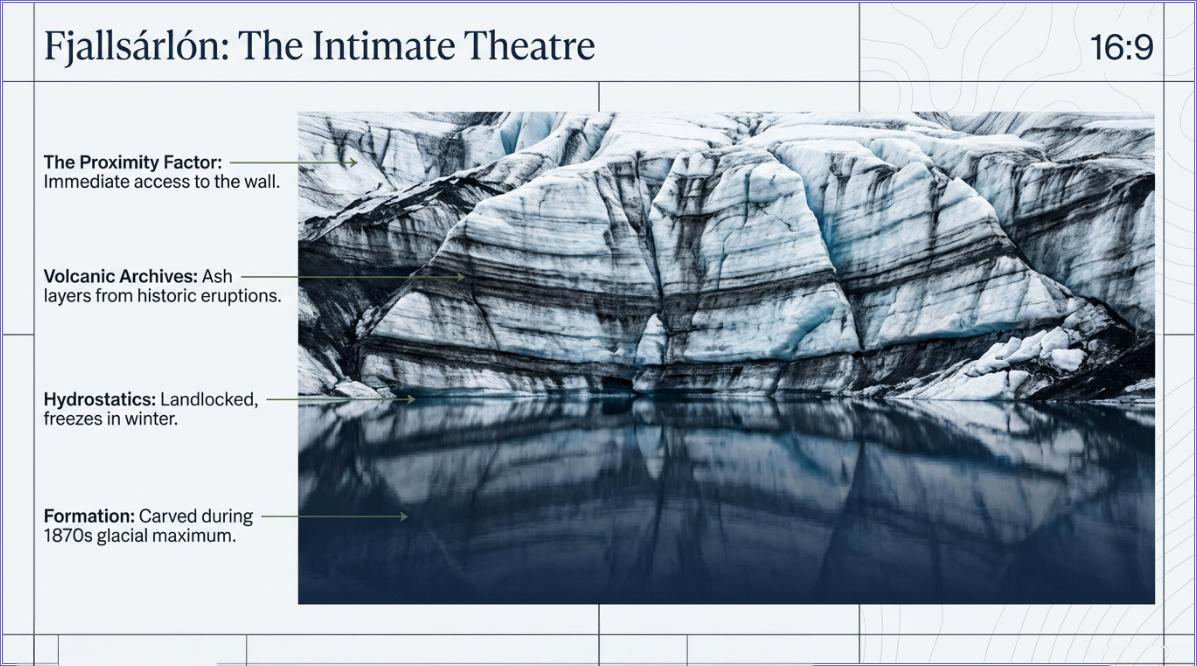
Fjallsárlón sits directly in front of the Fjallsjökull outlet glacier. South
Iceland's official tourism site notes the steep glacier tongue comes "all the way into the lagoon,"
which is why visitors often find the glacier presence far stronger here. The triangular peak
Miðaftanstindur adds to a natural amphitheatre of ice and rock that photographers love.
The reader-useful takeaway: Jökulsárlón feels like a major natural landmark even from the shore;
Fjallsárlón feels more like you've walked into a natural amphitheatre of ice and rock.
Icebergs: How They Behave
Jökulsárlón's connection to the sea means icebergs calve and eventually travel toward the Atlantic
— which is how ice fragments end up on Diamond Beach.
In contrast, Fjallsárlón is a landlocked freshwater lagoon. It can freeze in winter, locking
icebergs into fixed, serene positions that offer a starkly different aesthetic than the churning
tides of its larger neighbor.
Photography Tip
Jökulsárlón is a moving iceberg theatre; Fjallsárlón is more like a gallery where
the glacier wall is the star. For calmer shooting conditions and a dominant
glacier-wall
backdrop, choose Fjallsárlón. For iconic variety and beach-ice contrast, choose Jökulsárlón.
The Diamond Beach Connection
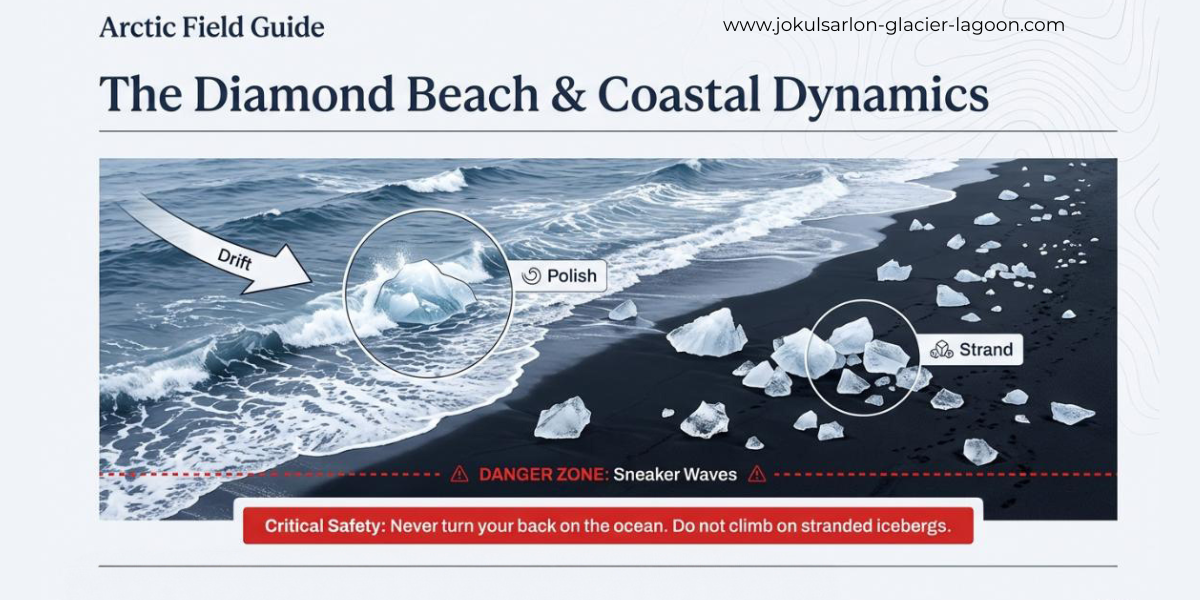
Diamond Beach (Breiðamerkursandur) sits next to
Jökulsárlón. Chunks of glacial ice are carried toward the sea and then washed back onto the black
volcanic sand by tides, creating the famous "ice diamonds" look. This makes Jökulsárlón a
two-for-one stop: lagoon and beach within minutes.
Fjallsárlón isn't the "source" of Diamond Beach in the same way, but it's only about 10 km
away—easy to pair in one short driving segment. In practical terms, either lagoon works as a
starting point for a Diamond Beach visit.
Crowds & Timing
Jökulsárlón isn't just "popular"—it's structurally one of the most visited nature stops in
Iceland's southeast. National visitor survey data shows it was visited by ~50% of summer
tourists and ~31% of winter tourists. In the busiest month, reporting
described around 100,000 visitors in July alone. In that same survey, 40%
of summer visitors felt there were too many tourists at the site.
Fjallsárlón, by contrast, is explicitly promoted by Vatnajökull National Park as popular with
travelers who want to enjoy nature "with fewer crowds." It has a simple visitor
set-up (car park, toilets, cafeteria, and tour desk) that supports the "calm but convenient"
experience.
Beat the Crowds
Many Reykjavík-based day tours run ~14 hours and include multiple stops, leading to
midday/early-afternoon crowding at Jökulsárlón. Shoulder-hour visits can be
much
calmer—and in summer, Iceland's long daylight makes very early or very late visits entirely
realistic.
Tours & Activities
Boat Tours
This is one of the clearest differentiators between the two lagoons.
Jökulsárlón
Amphibian boat tour: 7,100 ISK (adult 13+), ~30–40 min — the classic
big-boat experience among the icebergs.
Classic Zodiac tour: 11,300 ISK, ~75 min — small-group, closer to the
glacier wall.
Luxury boat tour: 275,000 ISK — private 2-hour journey with a secluded
island picnic.
Season: Early April to late October; hourly
departures in peak season.
From a decision standpoint: Fjallsárlón is often the value pick for zodiac-style
boating (lower entry price than Jökulsárlón's zodiac), while Jökulsárlón is the
only one offering the cheaper amphibian big-boat option.
Jökulsárlón kayaking is widely sold as a guided summer activity (typically May–September, often with
a
minimum age of 14). Fjallsárlón kayaking is available through select tour listings but is less
universally marketed.
Ice Caves & Glacier Walks
Both lagoons sit on the margins of the Vatnajökull ice cap, making them the most convenient meeting
points for ice cave tours on the South Coast. Ice caves
are typically a winter activity (roughly Oct/Nov–Apr), and major tours depart from
the Jökulsárlón area. Fjallsárlón's tour menu also includes premium ice cave experiences in winter.
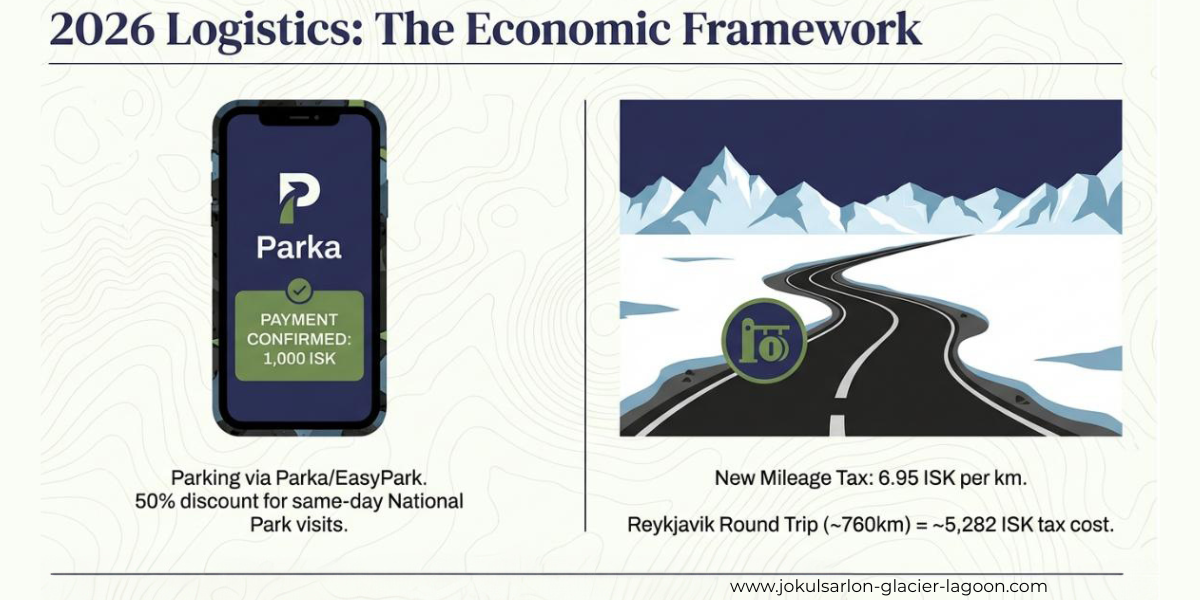
Part of Vatnajökull National Park's regional fee system. Current rate: 1,040
ISK for a passenger car (5 seats or fewer), valid until midnight.
A 50% discount applies if you've already paid at
another park service area that day (e.g. Skaftafell). The fee funds path maintenance,
snow removal, and parking-lot upkeep.
Fjallsárlón Parking (Free)
Commonly described as free parking by the operator
and major travel guides. Located right by the lagoon with easy walking access. As Iceland's
parking policies have evolved quickly in recent years, confirm signage on arrival.
Getting There
Both lagoons are accessed from Route 1 (the Ring Road), between Skaftafell and Höfn. From Reykjavík,
driving distance is roughly 374 km to Jökulsárlón (~4h 49 min) and 365 km
to Fjallsárlón (~4h 45 min). For Fjallsárlón, you leave Route 1 and drive a very short
access road (~600 meters) to the base area.
2026 Mileage Tax
As of January 2026, Iceland replaced traditional fuel taxes with a mileage tax of
6.95 ISK per km. For a standard round trip from Reykjavík to the glacier
lagoons (~760 km), budget an additional ~5,280 ISK in mileage fees. See our prices guide for more details.
Public transport: Limited bus service (Strætó Routes 51/52) reaches Jökulsárlón, but
frequency is limited and seasonal. Fjallsárlón is not a direct bus stop. Most visitors reach the
lagoons by rental car or organized tour. See our guide on how to get here.
Which Lagoon Is Best For You?
Choose Jökulsárlón If…
You want the iconic "bucket list" glacier lagoon. You want to see the famous blue icebergs,
walk on Diamond Beach, or take an Amphibian boat
tour.
Best for: first-timers, those short on
time, and anyone wanting the widest choice of water activities (amphibian,
zodiac, kayaking).
Choose Fjallsárlón If…
You want to be "hit in the face" by the glacier wall. Because the lagoon is smaller, the
glacier face feels much more imposing. It's perfect for those seeking fewer crowds.
Best for: solitude seekers,
photographers wanting calmer conditions, and travelers interested in
small-group zodiac tours.
Best For… (By Traveler Type)
Traveler Type
Best Choice
Why
First-Time Visitors
Jökulsárlón
Iceland's most visited lagoon; integrated into classic South Coast itineraries
Photographers
Both (different strengths)
Jökulsárlón + Diamond Beach for variety; Fjallsárlón for calm, glacier-wall
backdrops
Families
Both work well
Fjallsárlón: boat tours from age 5; Jökulsárlón: amphibian boats are
family-friendly
Short on Time
Jökulsárlón
Lagoon + Diamond Beach delivers more "headline value" in one cluster
Seeking Solitude
Fjallsárlón
National park positions it as the less-crowded option
Budget Travelers
Fjallsárlón
Typically free parking + lower zodiac price entry point
The distance between the two lagoons is only about 10 km (~10 minutes of driving). Since they're so
close, we highly recommend stopping at both.
Summer Itinerary
Start with Fjallsárlón for a quieter start and
the close glacier wall, then head to Jökulsárlón and finish at Diamond Beach when the light is softer. Summer's
long daylight hours make very early or late visits realistic.
Winter Itinerary
Use whichever lagoon is safest and most accessible that day
— conditions decide. Treat ice caves as the anchor activity that shapes
your schedule, and add lagoon stops around it. The aurora potential from September to late
March adds evening appeal to either location.
Safety at the Lagoons
⚠️ Critical Safety Rules
Do not swim, and do not step onto ice. Multiple safety sources warn against
entering glacial lagoon water or climbing on icebergs. The water is near 0°C, currents can be
strong, and icebergs can flip or collapse without warning. Even when winter makes parts of a
lagoon look frozen, "looks frozen" is not the same as safe.
Sneaker waves on Diamond Beach's black sands can reach significantly further up the
beach than preceding waves. When an iceberg collapses, it can create displacement waves powerful
enough to sweep a person off the beach.
Road conditions: Always check conditions before driving, especially in winter.
Iceland's road authority and SafeTravel provide live updates. See our weather & road conditions page.
Drones: Recreational drones are generally allowed in Vatnajökull National Park, but
regional restrictions apply and commercial filming requires permits. Consult the park's drone rules
before flying.
Frequently Asked Questions
Yes. Fjallsárlón is about 10 km from Jökulsárlón (roughly 10 minutes of
driving), making it one of the easiest "double stops" on the South Coast.
Jökulsárlón is generally the safer single pick because it's among Iceland's most visited
locations and is directly paired with Diamond
Beach.
Often yes—especially if you care about calmer views and a more dramatic "glacier wall"
feeling. The national park explicitly positions Fjallsárlón as a less-crowded nature
experience.
Yes. Jökulsárlón is part of Vatnajökull National Park's regional fee system. The current
rate is 1,040 ISK for a passenger car, valid until midnight. A 50% discount applies if
you've already paid at another park service area the same day (e.g. Skaftafell).
It is commonly described as free by the operator and major travel guides, but check
signage on arrival as Iceland's parking policies have changed quickly in recent years.
Boat tours are seasonal. Jökulsárlón boat tours generally run May to mid-November, while
Fjallsárlón's operator runs from early April to late October (weather permitting). See
our boat tours page for latest schedules.
Jökulsárlón kayaking is widely sold as a summer activity (often May–September, typically
14+). Fjallsárlón kayaking is available through some tour operators but is less
universally marketed—check current availability.
No. Safety authorities warn strongly against swimming or stepping onto ice due to extreme
cold, powerful currents, and icebergs that can flip or collapse without warning.
Recreational drone use is generally allowed in Vatnajökull National Park, but regional
restrictions apply and commercial filming requires permits. Always consult the park's
drone rules before flying.
Many Vatnajökull ice cave tours in winter
depart from the Jökulsárlón area. Both lagoons serve as convenient meeting points for
glacier-region activities depending on the operator and season.
Ready to Explore the Glacier Lagoons?
Whether you choose Jökulsárlón, Fjallsárlón, or both — an unforgettable glacier-lagoon experience
awaits on Iceland's South Coast.