Essential Guide

How Jökulsárlón Glacier Lagoon Was Formed

The Giant's Bathtub: A story of ice, water, and time

A Magical Place of Ice and Water

Jökulsárlón is known as the "Jewel of Iceland"—but it's much more than just a pretty place! It's a spot where you can watch the Earth reshape itself, like a giant piece of playdough. This shimmering lagoon is filled with crystal-blue icebergs that have broken away from their "parent" glacier.

Vatnajökull ice cap, Europe's largest glacier

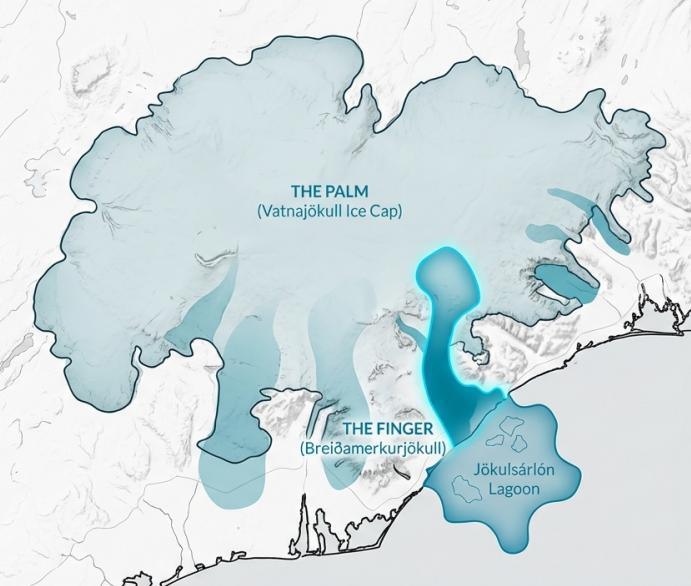
To understand the lagoon, one must look up. The Vatnajökull ice cap—Europe's largest frozen crown—acts as the palm of a giant hand.

Extending from this palm are outlet glaciers that flow like fingers into the valleys. The largest of these fingers is Breiðamerkurjökull. It is this specific "Ice Giant" that carved the landscape and created the lagoon we see today.
Did You Know?

The lagoon is only about 70 to 90 years old—that's younger than your grandparents! In geological time, it's like a newborn baby.

Today, the lagoon serves as the deepest lake in Iceland, reaching approximately 300 meters below sea level. That's deep enough to hide the entire Eiffel Tower underwater!

Meet the Ice Giant: Breiðamerkurjökull

Breiðamerkurjökull glacier carving through the landscape like nature's bulldozer

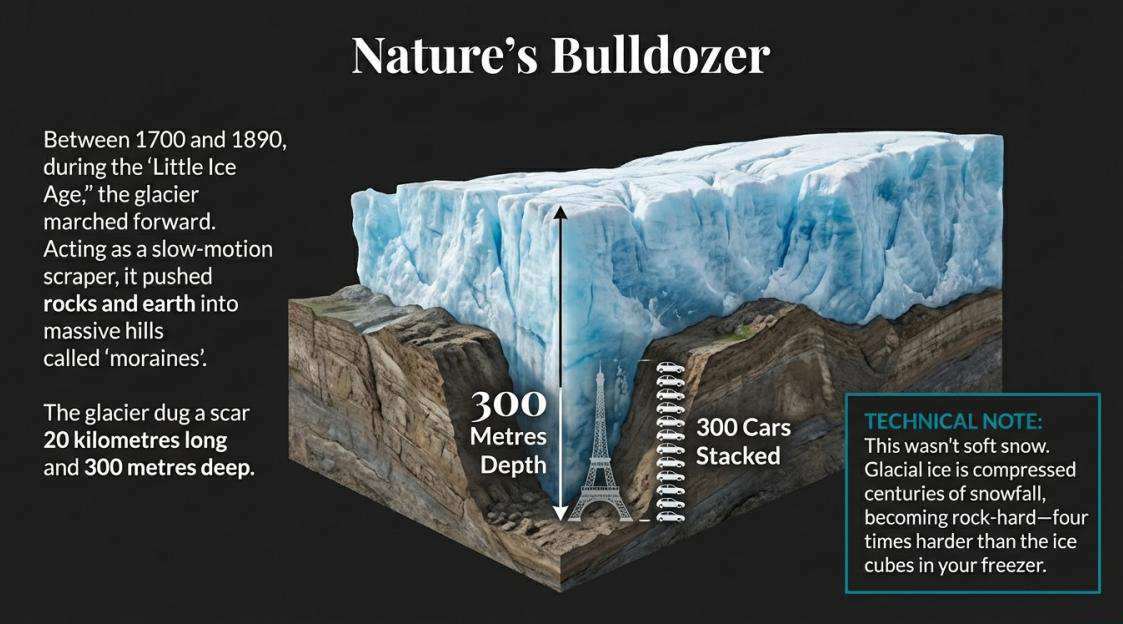
Scientists call glaciers "nature's bulldozers" because they are incredibly heavy and move with enough force to grind mountains into dust! Underneath this ice giant lies a 20-kilometer-long scar—a massive trench the glacier carved out of the earth over centuries.

The glacier isn't just a pile of snow. It's made of centuries of snowfall squashed down until it becomes rock-hard ice—four times harder than the ice cubes in your freezer!

Why is the Ice Blue?

The ice at the edge of the lagoon can be up to 1,200 years old! Over those twelve centuries, the weight of the glacier has squeezed out almost every single air bubble. When light hits this crystal-clear ice, it swallows up red and yellow colors and leaves only the brilliant, shivering blue for us to see.

The Lost Land Beneath the Ice

Before the glacier arrived, this area was a warm, leafy woodland called "Little Shire" (Litlahérað). However, the ice giant was so powerful that it completely swapped the forest for a frozen wasteland. Today, the area is called Öræfi, which means "The Wasteland."

Lucky explorers sometimes find 3,000-year-old pieces of ancient wood popping out from under the melting ice—like a treasure hunt from a lost world!

Digging the Deepest Hole

Between the years 1700 and 1890, the world went through a cold snap called the "Little Ice Age." The glacier grew and marched forward like a slow-motion scraper, pushing rocks and dirt into huge hills called "moraines."

Using its massive weight, it dug a hole reaching 300 meters deep. Imagine stacking 300 cars on top of each other—that's how deep the lagoon is!

The Super Scraper

During its peak advance, the glacier removed sediment at an average rate of 32 million cubic meters per year. That's like filling 12,800 Olympic swimming pools with dirt every single year!

What Happened to the Coastline?

Because the lagoon now acts as a massive sediment trap (like a giant filter catching dirt), the coast has been starved of the sand that once protected it. The shoreline near the lagoon has retreated by a staggering 770 meters since 1904!

The Big Melt: How the Lagoon Filled Up

In the 1930s, the climate began to warm, and the ice giant started to "retreat." A glacier retreats when it melts at the bottom faster than new ice can slide down from the top.

As the glacier backed away, the 300-meter-deep hole it had dug began to fill with water. This was the birth of the Jökulsárlón lagoon!

Watch It Grow!

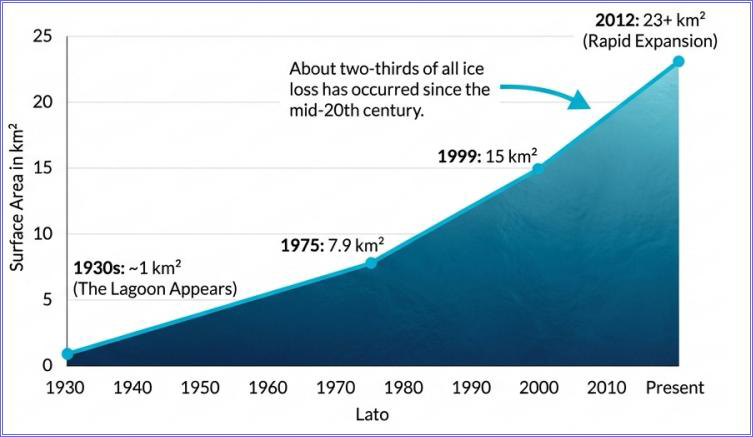
About two-thirds of all the ice loss has happened just since the middle of the 20th century! The lagoon has been growing super fast.

How the "Bathtub" Has Grown

Visual timeline showing the glacier's retreat and lagoon expansion from the 1930s to present
Year What Happened Size
1930s The lagoon first appears ~1 km²
1960 Lagoon continues to expand ~5 km²
1975 Basin holds 500 million m³ of water 7.9 km²
1999 Still growing rapidly 15 km²
2012 Size more than doubles in decades! 23+ km²

The Ocean Connection

Unlike most glacial lakes, Jökulsárlón is connected to the North Atlantic Ocean through a narrow channel. Every tide, warm and salty "Coastal Atlantic Water" surges into the lagoon.

Because salt water is very dense and heavy, it dives deep under the fresh water and rushes all the way to the glacier's "toe." This warm water melts the ice from underneath about seven times faster than it did in the past!

The "Milky Blue" Color

The visual result of this mixing is the lagoon's signature "milky blue" hue—a suspension of fine "rock flour" minerals ground from the earth and lit up by the North Atlantic sun.

From Icebergs to Diamonds

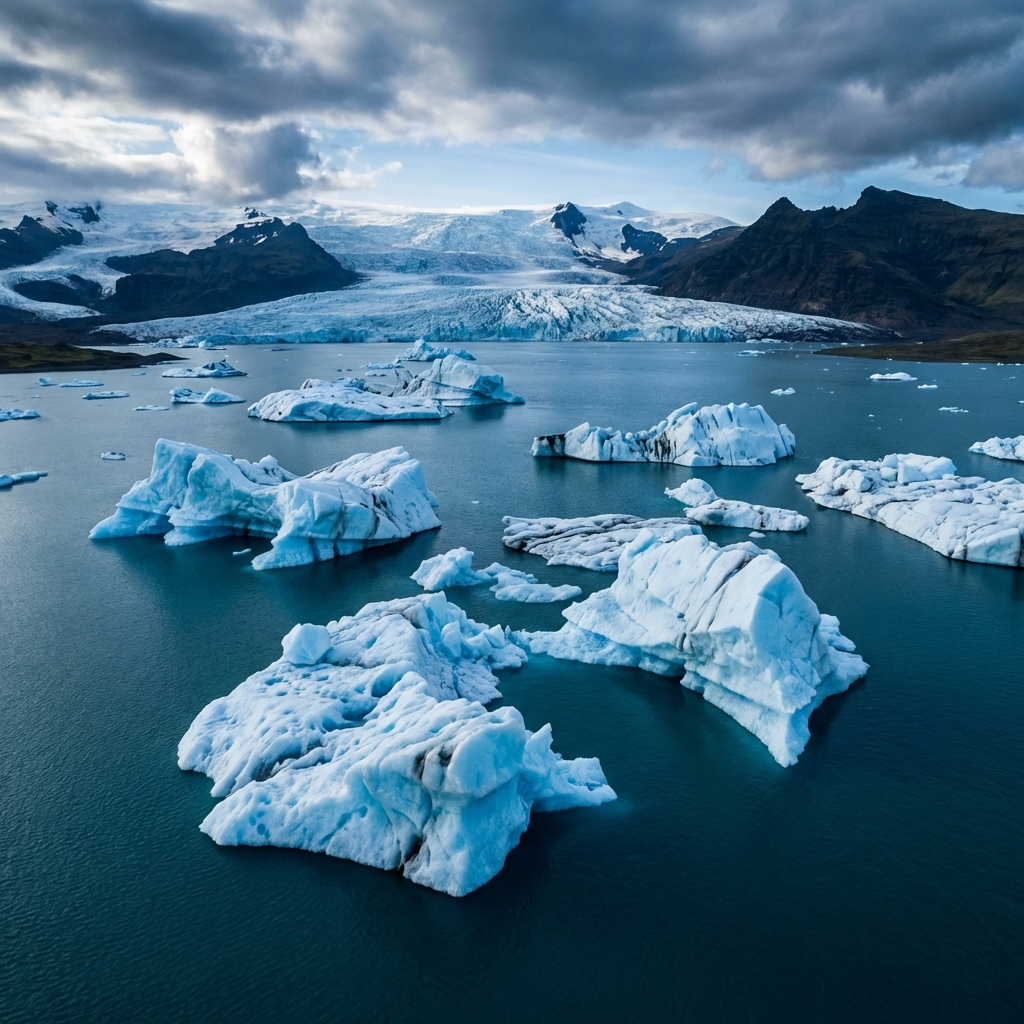
Massive icebergs floating in Jökulsárlón glacier lagoon
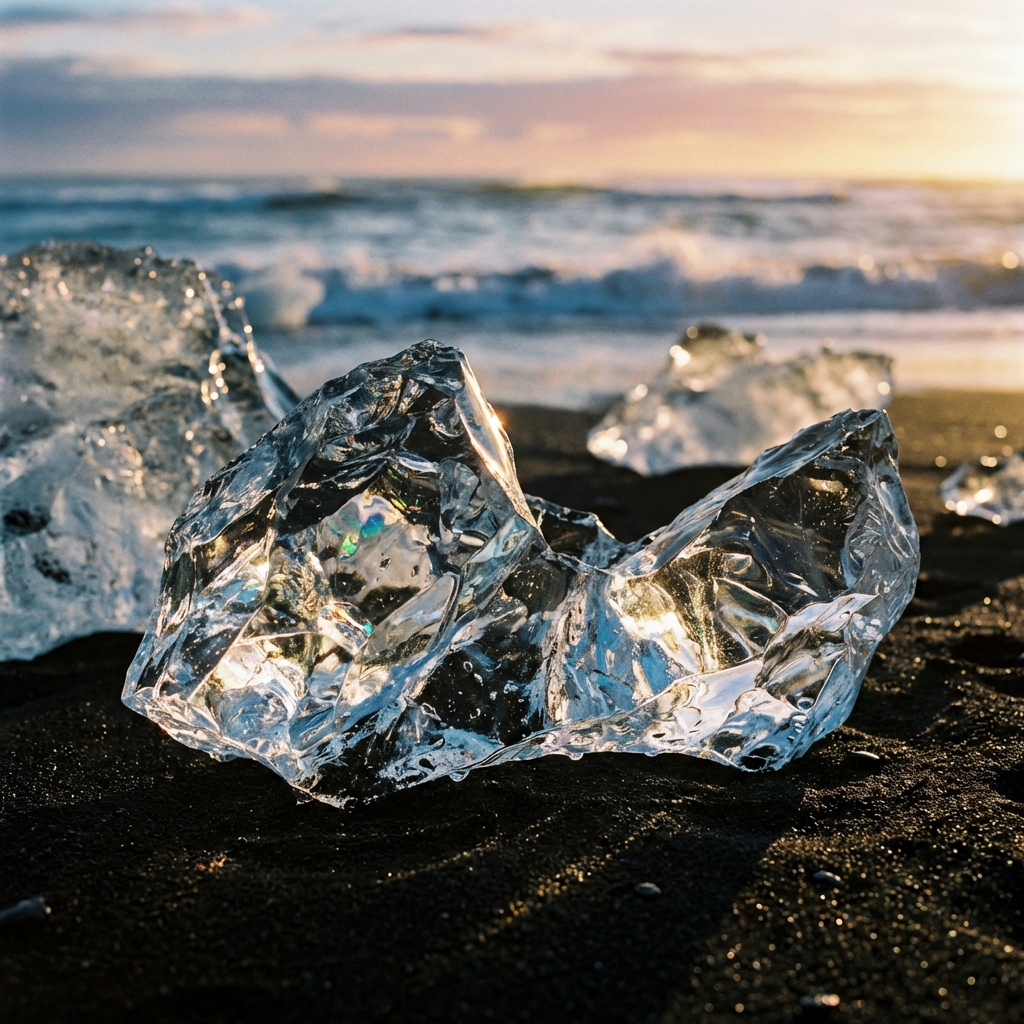
Ice diamonds on the black sand of Diamond Beach

The lagoon is a continuous, natural "sculpture show." When huge chunks of ice break off the glacier and crash into the water with a booming splash, it's called "calving." Think of an iceberg as a "fingernail clipping" coming off the finger of the glacier!

The Journey of an Iceberg

Where It Is What Happens
In the Lagoon It floats for up to 3 years, tumbling and rolling, showing off its deep-blue "inner" ice
In the Channel It catches the outgoing tide and floats toward the sea
On Diamond Beach Waves wash the ice onto black volcanic sand. The ocean polishes them until they sparkle like diamonds!

The Three Colors of Jökulsárlón Ice

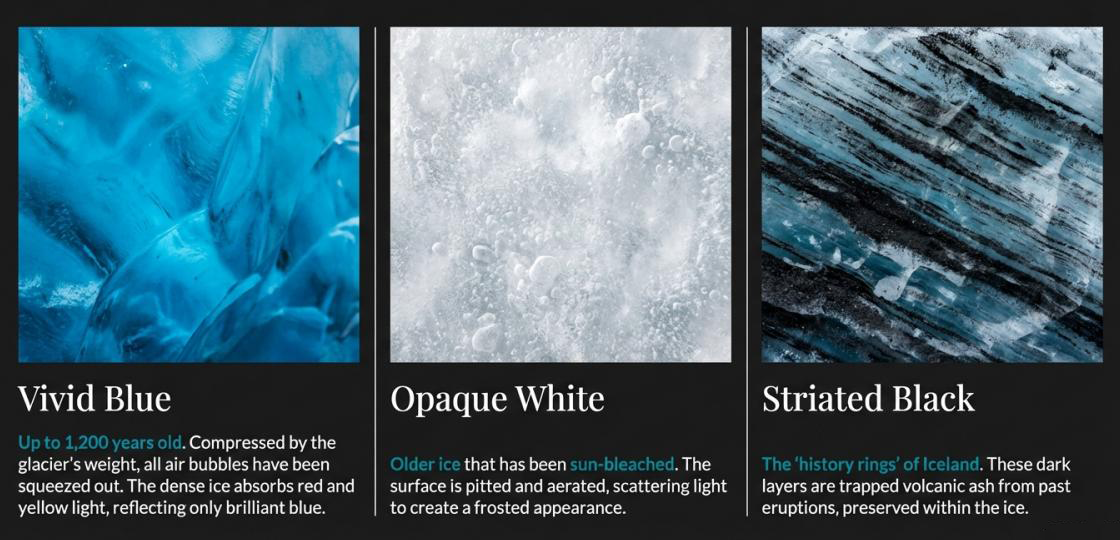
The three distinct colors of Jökulsárlón ice - vivid blue, opaque white, and striated black

Vivid Blue

Compressed over centuries, this dense ice has had every air bubble squeezed out. It absorbs red and yellow light, reflecting only deep blues.

Opaque White

Older ice that has been sun-bleached. The surface becomes pitted, scattering light and creating a brilliant, frosted appearance.

Striated Black

These are the "history rings"—volcanic ash from past eruptions trapped within the ice layers!

Safety First!

The water in the lagoon is extremely cold and can cause life-threatening hypothermia in seconds. Never, ever climb on the icebergs! They are unstable and can roll over without warning.

Plan Your Adventure

Jökulsárlón is more than a destination—it's a "living laboratory" where you can witness how a glacier works from the inside!

Seasonal Highlights

Feature Summer (June–August) Winter (November–March)
Best Activities Boat/Zodiac Tours, Kayaking, Midnight Sun Blue Ice Caves, Aurora Hunting
Wildlife Breeding Seals, Arctic Terns, Skúas Seals on ice, occasional Reindeer
Atmosphere Golden hour light on sun-bleached ice Northern Lights reflecting on icebergs

Our Shared Responsibility

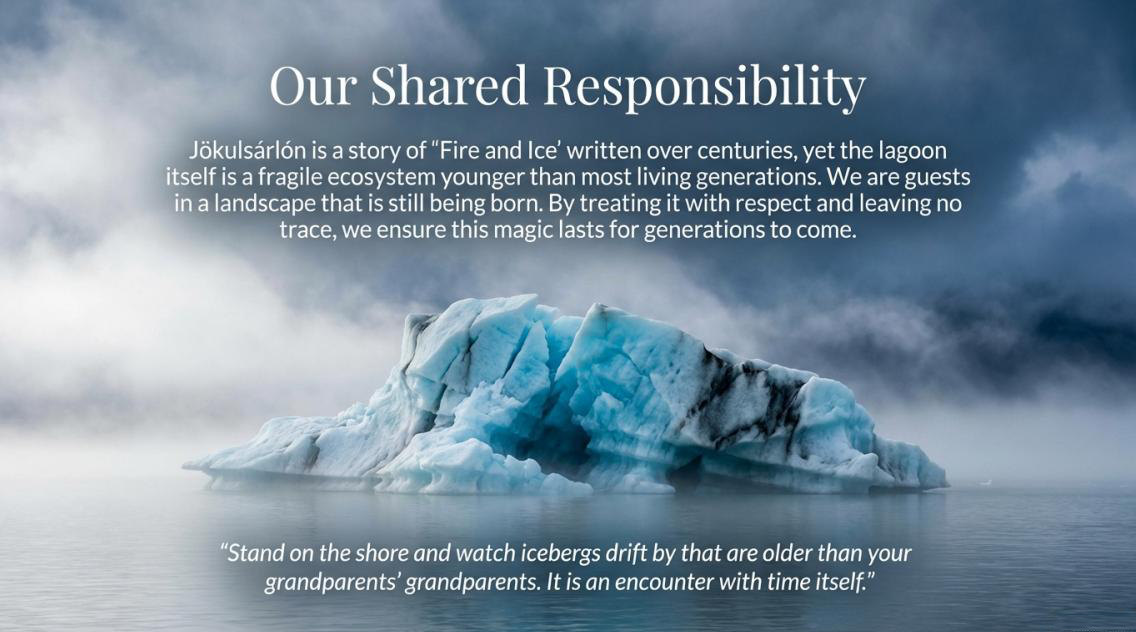
Because this amazing place is only about 70 to 90 years old, it is very fragile. We all have a shared responsibility to protect it!

Protecting the fragile ecosystem of Jökulsárlón Glacier Lagoon

Be a Respectful Guest

  • Never feed the animals
  • Keep a safe distance from wildlife and icebergs
  • Never leave litter behind
  • Stay on marked paths

Jökulsárlón is a living story of "Fire and Ice"—by protecting it, we ensure its magic lasts for generations to come.

Ready to See This Living Masterpiece?

Stand on the shore and watch icebergs that are older than your grandparents' grandparents drift by. It's an adventure you'll never forget!

Explore Jökulsárlón Tours