Why Timing Matters So Much
Seeing the northern lights in Iceland is never just about showing up in winter and hoping for the
best. The aurora depends on a combination of darkness, clear skies, low light pollution, and enough
solar activity to make the sky come alive.
For travelers already planning time around Jökulsárlón Glacier Lagoon, choosing the right month can
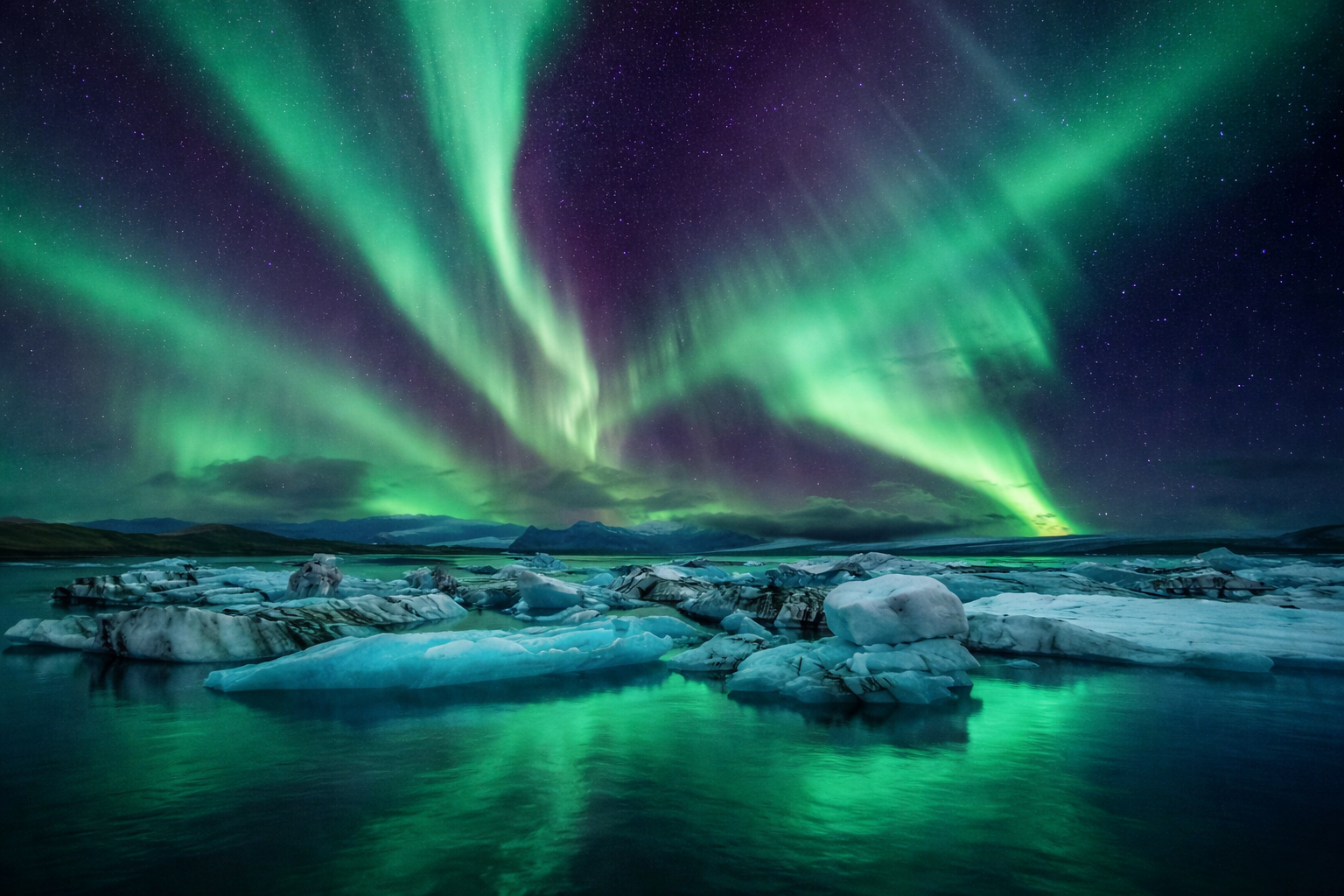
be the difference between a cloudy, stormy week and a trip where glowing green ribbons reflect off
floating icebergs.
Quick Answer
For most travelers, February is the best overall month. It offers long dark
nights, better sightseeing daylight than midwinter, and strong aurora potential across southeast
Iceland.
When Is Northern Lights Season in Iceland?
The practical northern lights season in Iceland runs from late August through mid-April.
You need real darkness, which rules out the bright summer period. Within that window, some months
are clearly better than others.
| Month |
What It Is Like |
Best For |
| September |
Season begins, milder weather, dark nights return |
Balanced sightseeing and aurora hunting |
| October |
Longer nights, manageable roads, strong viewing potential |
A great all-round shoulder season choice |
| November |
Darker and wilder, with more storms and cloud risk |
Travelers with flexible plans |
| December-January |
Very dark, but also Iceland's most unpredictable winter weather |
Maximum darkness and full winter atmosphere |
| February |
Long nights, clearer patterns, more usable daylight |
The strongest overall month for most visitors |
| March |
Excellent balance of darkness and improving conditions |
Late-season aurora trips with easier travel |
| April |
Very late season, with quickly fading darkness |
Early-April only, if the forecast aligns |
The Best Months to Aim For
February: The Best Overall Choice
February is the sweet spot for a dedicated aurora trip. You still get long, dark nights, but the
extra daylight makes travel easier and daytime excursions more rewarding. Around Jökulsárlón, that
means you can explore the lagoon, Diamond Beach, and possibly an ice cave tour during the day, then
stay ready for aurora conditions at night.
September and March: Smart Shoulder-Season Picks
If you want fewer winter-driving headaches and a more balanced itinerary, September and March are
excellent alternatives. Nights are dark enough, weather patterns can be more forgiving, and you
still have a strong shot at a memorable show.
Best Strategy
Book at least two or three nights near the glacier lagoon instead of relying on
a single evening. Aurora success depends on weather as much as solar activity, so multiple
attempts matter.
The Four Conditions That Need to Align
Darkness
The darker the sky, the stronger the contrast and the easier it is to see faint displays
with the naked eye.
Clear Skies
Cloud cover is the biggest deal-breaker. A low-KP clear night can outperform a high-KP
cloudy one every time.
Low Light Pollution
Jökulsárlón has a major advantage here. It is far from city glow, which makes even moderate
aurora activity more visible.
Solar Activity
In Iceland, you do not need extreme numbers. Even a modest forecast can produce a visible,
beautiful display in the southeast.
How to Read the Forecast Like a Practical Traveler
The Icelandic approach is simple: start with the cloud map, then look at the aurora
strength. If the sky is overcast, the KP index barely matters. If a clear gap opens over southeast
Iceland, even a moderate forecast can deliver.
| KP Level |
What It Usually Means in Iceland |
Expectation |
| 0-1 |
Very quiet conditions |
Possible faint glow, often stronger on camera than to the eye |
| 2-3 |
Moderate and common |
Often enough for visible aurora from dark places like Jökulsárlón |
| 4-5 |
Strong activity |
High chance of a vivid, memorable display |
| 6+ |
Storm-level activity |
Potential for dramatic movement and color across a wide stretch of sky |
Local Rule of Thumb
Do not chase the highest KP number first. Chase the clearest sky first,
especially around the glacier lagoon.
Why Jökulsárlón Is One of Iceland's Best Aurora Locations
Jökulsárlón Glacier Lagoon combines nearly everything northern lights photographers and travelers
want: darkness, an open horizon, reflective water, floating icebergs, and quick access to Diamond
Beach. On a strong night the aurora does not just sit above the landscape, it becomes part of it.
Best Viewing Areas
Main lagoon shoreline: best for wide reflections and classic iceberg
compositions.
Bridge area: useful for broad views across the lagoon and toward the ocean
outlet.
Diamond Beach: ideal if you want black sand, stranded ice, and a more
cinematic foreground.
Fjallsarlon: a quieter backup option nearby when you want less foot traffic.
Trip Planning Tips for Jökulsárlón
Jökulsárlón sits about five to six hours from Reykjavik in good conditions. In winter, treat that
drive with respect. Road conditions can change quickly, and the best aurora trip is the one where
you still have enough flexibility to wait out a storm or shift your timing by a day.
Stay Nearby
Sleeping close to the lagoon gives you the freedom to respond when the sky suddenly clears at
10 PM or after midnight.
Give Yourself Time
Two or three nights near the area massively improves your odds compared with a same-day drive
in and out.
Use Daylight Well
Plan daytime activities like ice caves, sightseeing, or Diamond Beach walks so the evenings
stay flexible for aurora hunting.
What to Pack for Northern Lights Nights
Standing outside for one to three hours in southeast Iceland can feel much colder than the
temperature suggests once wind and inactivity set in. Dress to stay outside longer, because auroras
often come in waves.
| Item |
Why It Matters |
Priority |
| Layered thermal clothing |
Keeps you warm without trapping moisture |
Essential |
| Waterproof insulated boots |
Important for icy ground and cold standing time |
Essential |
| Hat, gloves, neck gaiter |
Small items that determine how long you last outside |
Essential |
| Headlamp with red mode |
Lets you move safely without ruining night vision |
Very useful |
| Hand warmers and thermos |
Extends your patience and comfort during long waits |
Highly recommended |
Cold-Weather Reminder
Wind chill matters more than the headline temperature. A calm winter night and a windy winter
night can feel completely different, even at the same number on the forecast.
Frequently Asked Questions
What is the single best month to see northern lights in Iceland?
February is the best overall choice for most travelers, with March and late September also being
strong alternatives.
How many nights should I allow?
At least three nights gives you a reasonable chance. More is better if the aurora is a major
priority for your trip.
Is Jökulsárlón worth the long drive for the aurora?
Yes, especially because the area is not just an aurora stop. The glacier lagoon, Diamond Beach,
ice caves, and the wider southeast coast make it a complete destination.
Planning an Aurora Trip Around Jökulsárlón?
Use the dark skies, glacier scenery, and nearby winter activities to turn a northern lights chase
into a full southeast Iceland adventure.
Explore Tours