A Landscape That Never Looks the Same Twice
Asking for the best time to visit Iceland is a bit like asking which flavour of ice
cream is "best" — the answer depends entirely on what you crave. A summer visit to Jökulsárlón
Glacier Lagoon delivers endless daylight, boat tours weaving between sapphire icebergs, and harbour
seals lounging on floating ice. Visit Iceland during winter and the same lagoon
transforms into an aurora-lit wonderland framed by blue ice caves and giant "diamonds" washed onto
black sand.
Choosing the best months to visit this glacier lagoon — Iceland's deepest at 248 m —
really comes down to one question: do you prioritise access and light, or drama and
exclusivity? This guide breaks down every season so you can decide which version of
Jökulsárlón owns your heart.
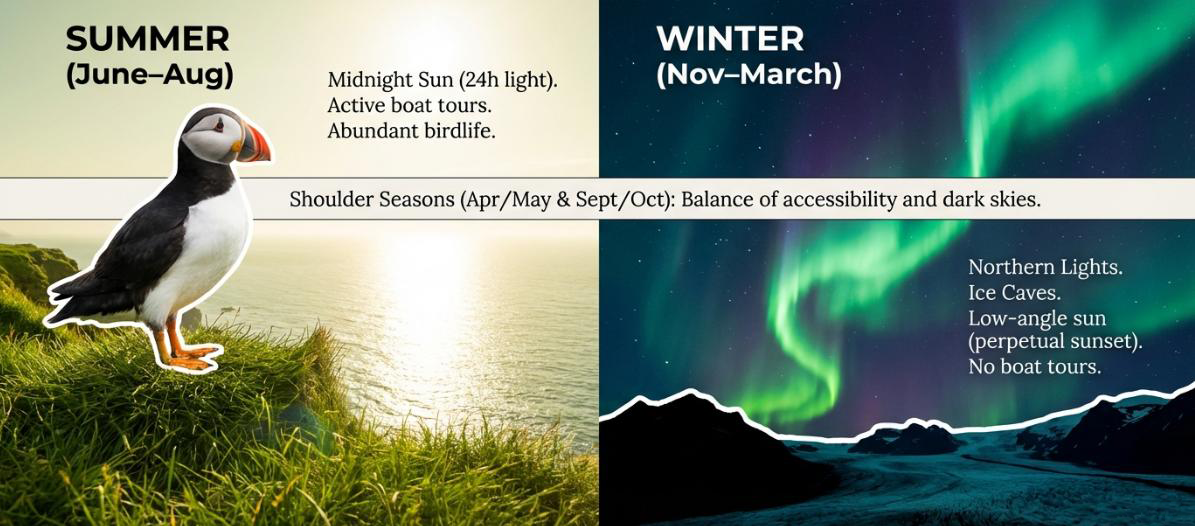
Summer: Midnight Sun and Marine Life (June – August)
Summer is the best season to visit if you value accessibility above all else. The
Midnight Sun delivers up to 21 hours of daylight in June, erasing the usual constraints of travel.
Roads are reliably clear, every tour is running, and the lagoon is at its most alive with wildlife.
Boat Tours on the Lagoon
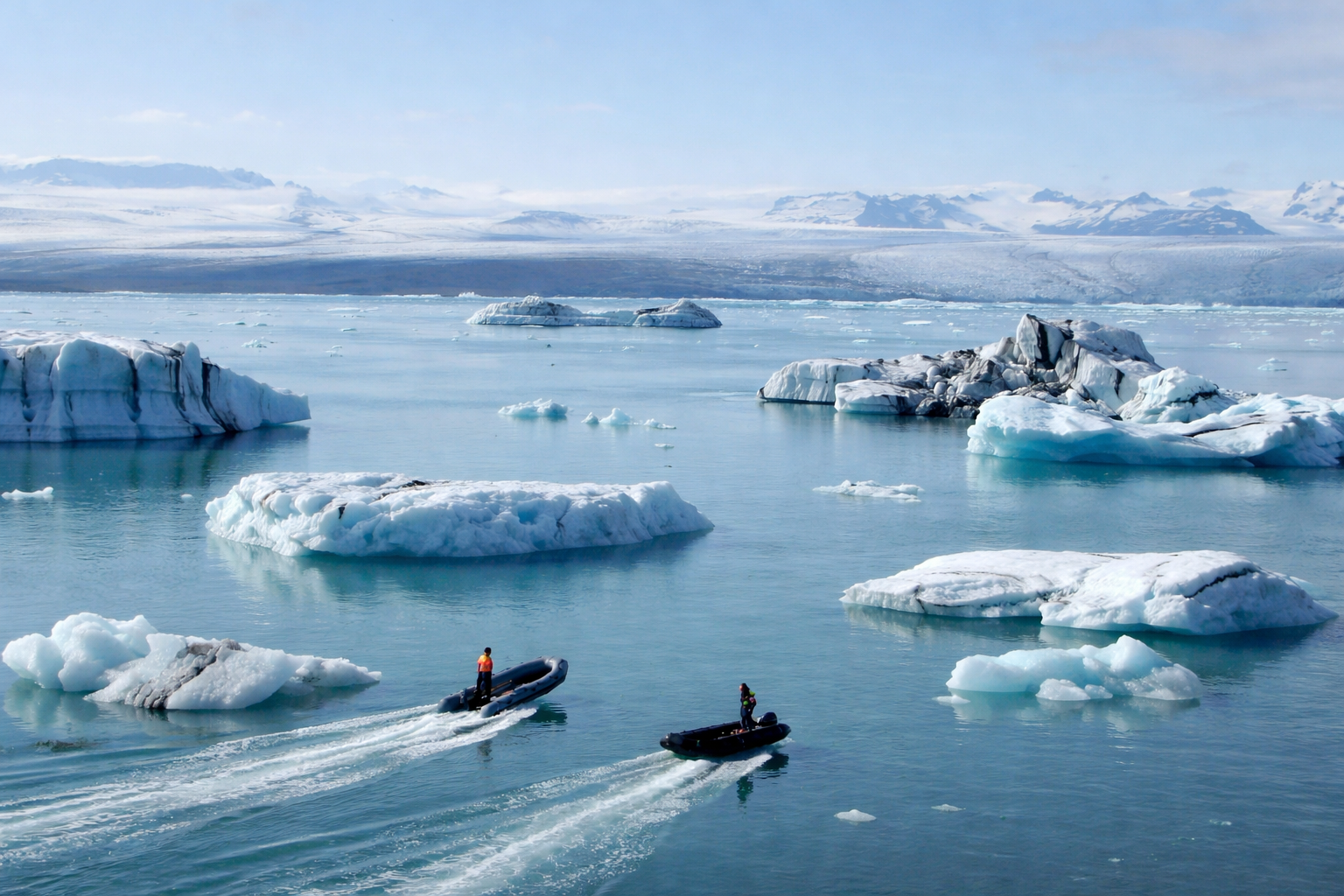
From May through October, the lagoon opens for navigation. There are three ways to experience the
ice from the water:
Amphibious Boat Tours
Stable, family-friendly vessels that drive directly from land into the ice-choked water.
Their high vantage point is ideal for panoramic photos.
Zodiac Tours
Smaller, faster inflatable boats that weave deep into the lagoon toward the glacier face.
Note: minimum age requirement of 8 years.
Kayaking
Available May–September for those who want absolute silence among the bergs. The most
intimate way to experience the ice.
Wildlife and Conditions
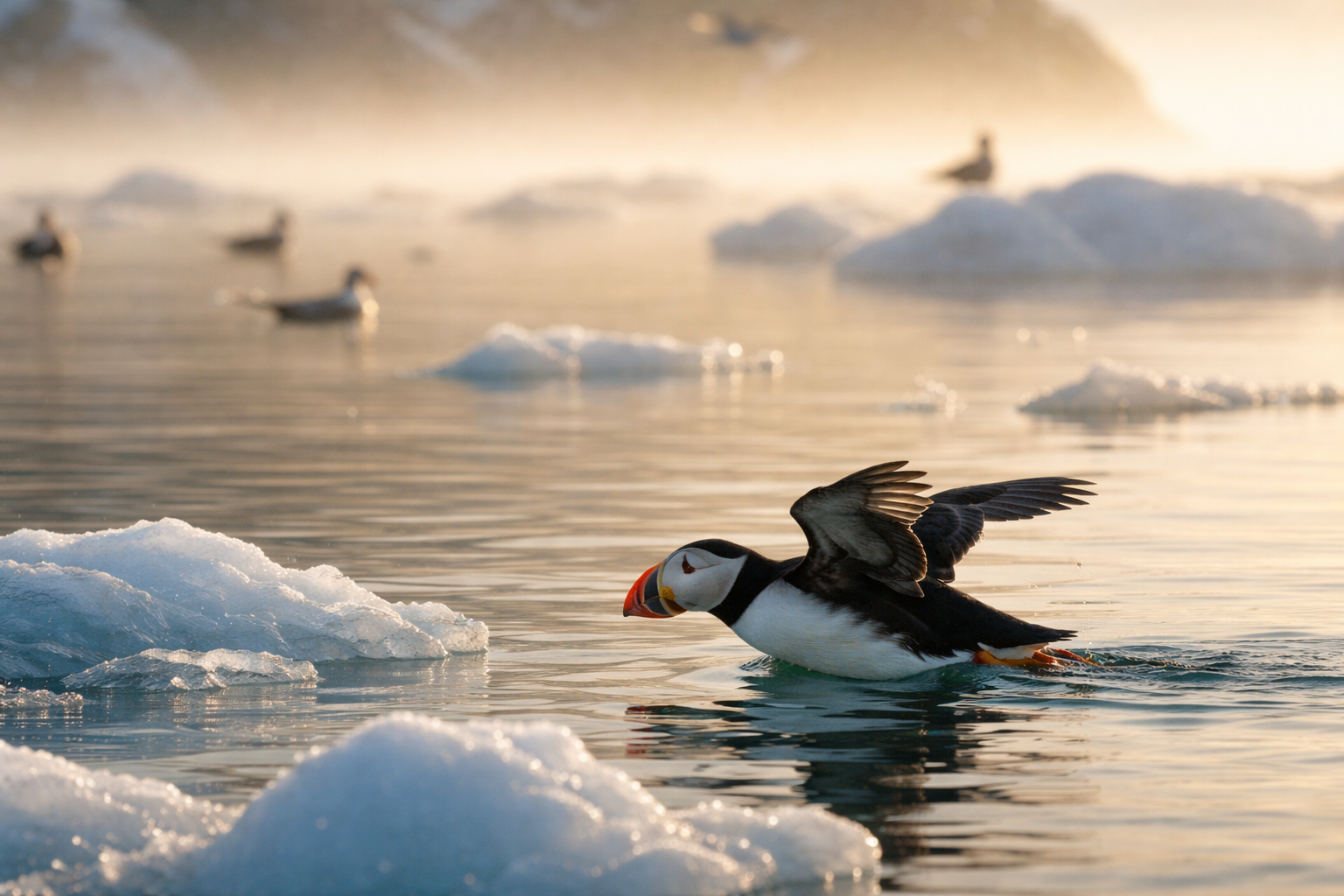
Summer is the peak of biological activity at the lagoon. Contrary to popular belief,
July is the primary pupping season for harbour seals in Iceland — you'll see them
basking on ice floes and teaching pups to navigate the bergs. Arctic Terns and Skuas nest along the
shore, diving and calling overhead.
- Daylight: Up to 21 hours in June; sunset barely dips below the horizon
- Temperature: Average high of 8 °C (47 °F) — mild but bring layers
- Crowds: Peak visitor numbers; arrive before 10 AM or after 7 PM to beat
tour buses
Insider Tip: The 2 AM Strategy
Because Jökulsárlón is a five-hour drive from Reykjavík, most visitors
arrive with the midday tour buses. Stay at a nearby hotel like Fosshotel Glacier Lagoon and
walk the lagoon under the soft glow of a 2:00 AM Midnight Sun, long after the crowds have
departed. This strategy only works in summer.
Winter: Ice Caves and Aurora (November – March)
If summer is about accessibility, Iceland in the winter is about raw, unfiltered
drama. The instability of summer gives way to the structural integrity of deep cold, unlocking
Iceland's most prestigious seasonal experiences.
Blue Ice Caves
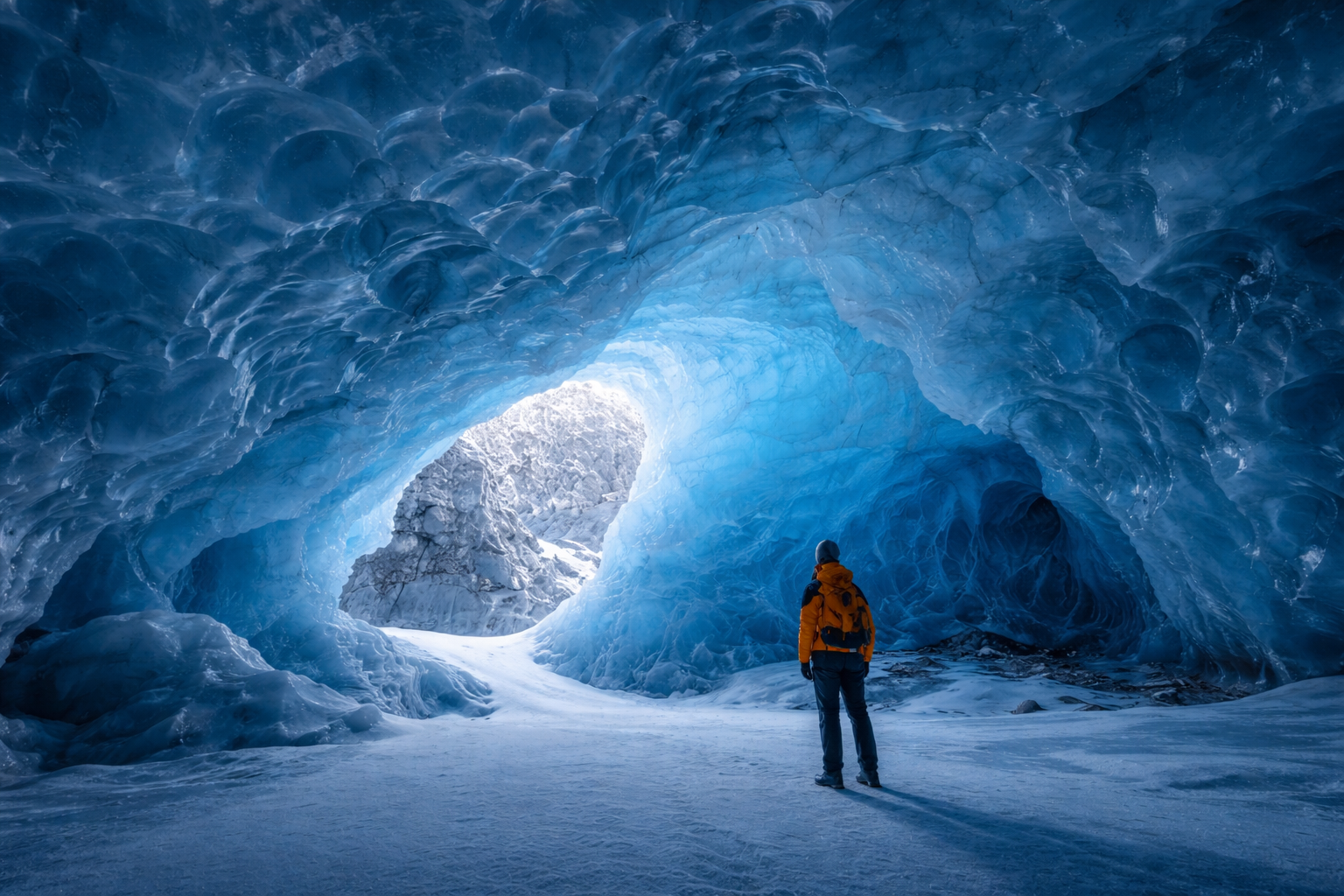
From November through March, the Crystal ice caves of Vatnajökull become accessible via Super Jeep.
These are natural meltwater tunnels that freeze into sapphire-blue chambers. The colour is not
paint or trickery — centuries of compression have squeezed every oxygen bubble out of the ice, and
the dense crystals absorb the full light spectrum, reflecting only deep, electric blue.
Diamond Beach at Its Best
Winter offers the most consistent displays of large "diamonds" on the black sand. A powerful seasonal
synergy drives it: increased glacier calving combined with stronger winter tides push massive,
statuesque chunks of ice back onto the beach. The low winter sun pours golden light through these
translucent blocks, turning each one into a glowing sculpture.
The Aurora Factor
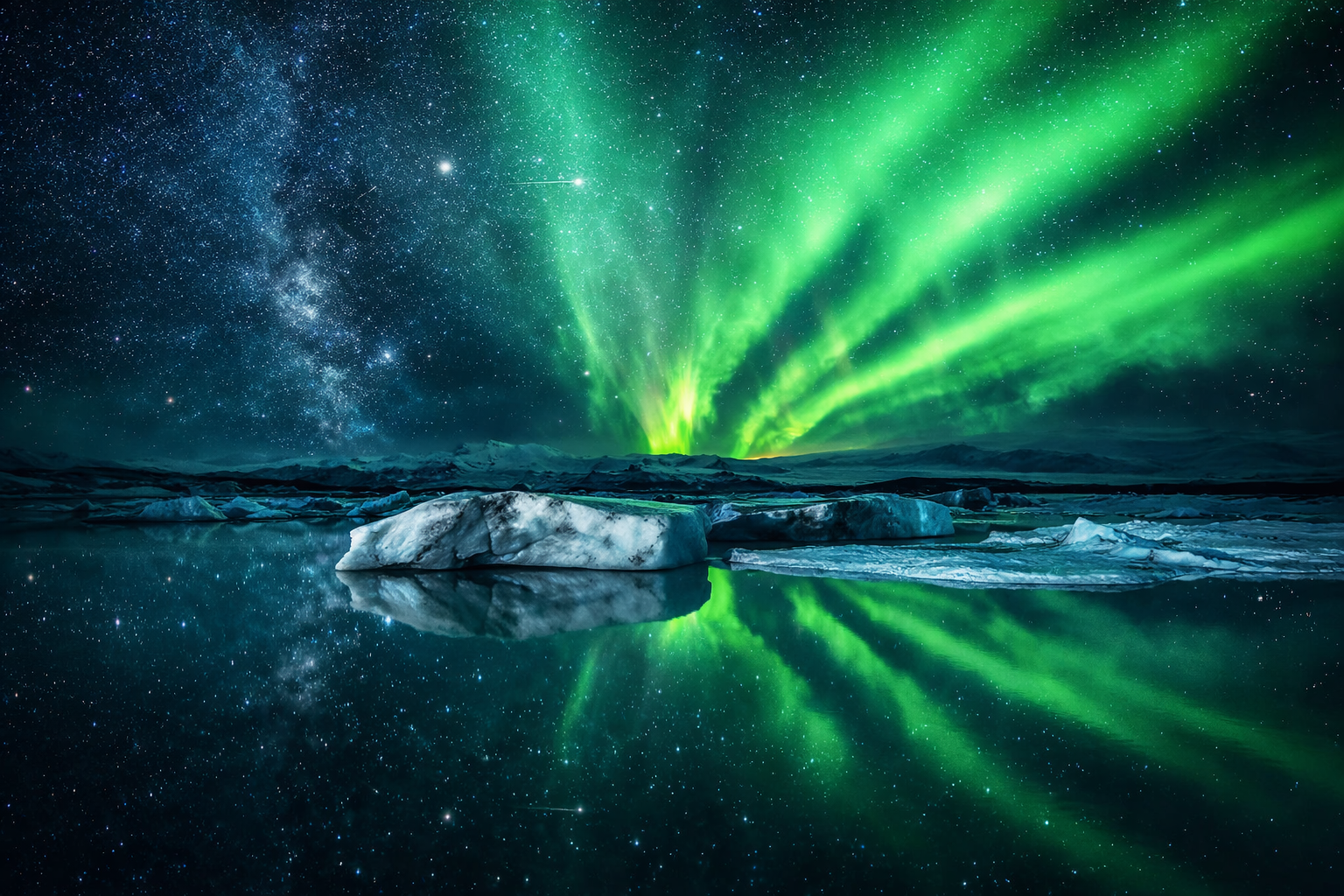
Jökulsárlón is a premier spot for Northern Lights photography. The low sun angles of
winter provide a "golden hour" that lasts nearly the entire short day, while the dark nights allow
the aurora to reflect off the mirror-like lagoon — effectively doubling the display.
- Daylight: As little as 4–5 hours in December; plan activities around the
brief midday window
- Temperature: Near freezing; wind chill can make it feel much colder
- Driving: A 4×4 vehicle is non-negotiable for winter Ring Road travel
- Boat tours: Generally not available November–April
Shoulder Seasons: The Smart Traveller's Gamble (April–May & September–October)
The shoulder months are a strategic gamble that often pays off with lower prices and thinner crowds.
Late September into October is frequently the best time to go for photographers —
you retain enough daylight for long drives, yet the return of dark nights offers your first chance
at the Aurora.
| Category |
Spring (April–May) |
Autumn (Sept–Oct) |
| Weather |
Unpredictable; sleet and fog are common |
High winds; first snows likely in October |
| Daylight |
18–20 hours by late May |
11–13 hours; return of dark nights |
| Activities |
Boat tours begin in May; kayaking starts |
Boat tours end in October; kayaking ends September |
| Ice Caves |
Generally close by mid-April |
May open late October/November if cold enough |
| Crowds |
Noticeably fewer visitors |
Thin crowds; excellent value on accommodation |
Photographer's Sweet Spot
The "pastel palette" of an October sunset at Diamond Beach is a
photographer's dream. The sun stays low all day, turning the ice chunks into glowing sculptures
of pink and gold — and you won't be fighting for tripod space.
Season at a Glance: What Can You Do When?
| Experience |
Summer
(Jun–Aug) |
Winter
(Nov–Mar) |
Shoulder
(Apr–May / Sep–Oct) |
| Boat Tours |
✅ Full season |
❌ Closed |
⚠️ May & Oct only |
| Ice Caves |
❌ Melted |
✅ Peak season |
⚠️ Closing/opening |
| Northern Lights |
❌ Too bright |
✅ Best chance |
✅ Sep–Oct / possible in March |
| Midnight Sun |
✅ 21 h daylight |
❌ 4–5 h daylight |
⚠️ Long but not midnight |
| Diamond Beach |
✅ Accessible |
✅ Largest ice pieces |
✅ Accessible |
| Seals & Birdlife |
✅ Peak (July pups) |
⚠️ Fewer sightings |
⚠️ Declining / returning |
| Crowds |
🔴 Peak |
🟢 Very low |
🟢 Low |
Survival Guide: Safety and Logistics
In the Arctic, safety is the foundation of every successful visit. The environment is not
"dangerous" so much as it is unforgiving. Prepare properly and it will reward you;
cut corners and it will teach you a lesson.
Winter Driving Essentials
- 4×4 Required: Non-negotiable for any winter Ring Road travel
(November–March)
- Speed Limits: Strictly enforced — 90 km/h paved rural, 80 km/h gravel, 50
km/h towns. Fines can exceed $600 (80,000 ISK)
- Essential Apps: Download the 112 Iceland app and check
safetravel.is,
road.is, and
vedur.is daily
- Car Doors: Icelandic winds can rip a car door off its hinges — always grip
it firmly when opening
Lagoon and Beach Hazards
Critical Safety Rules
- Never climb on icebergs. They are unstable and can flip without warning,
trapping you in water that induces fatal hypothermia in minutes. Heavy fines apply.
- Beware sneaker waves. On Diamond Beach, the Atlantic can surge much further
inland than expected. Never turn your back on the ocean.
The Buffer Day Strategy
Always build at least one "buffer day" into your itinerary. If a Red
weather alert is issued, you stay put. Period. The lagoon will still be there tomorrow.
Which Season Owns Your Heart?
Iceland reveals different facets of its power depending on when you choose to face it. Here's a quick
guide to help you pick the best season to visit:
The Photographer
Focus on winter (November–March) for the Aurora and the massive Diamond
Beach displays, or autumn (September–October) for the extended golden hour
and empty beaches.
The Family Traveller
Focus on summer (June–August) for the mildest weather, harbour seal pups in
July, and amphibious boat tours the whole family can enjoy.
The Adventure Seeker
Focus on winter for the Blue Ice Caves and Super Jeep expeditions into the
Vatnajökull interior — experiences that simply don't exist in summer.
Remember the Icelandic mantra: "There is no bad
weather, only bad clothing." Pack your waterproofs, respect the road, and the island will show you
its magic.
Ready to Experience Jökulsárlón?
Whether you choose the Midnight Sun or the Northern Lights, booking your tours in advance is the
smartest move. Boat tours and ice cave expeditions sell out fast in peak season.
Explore Tours